

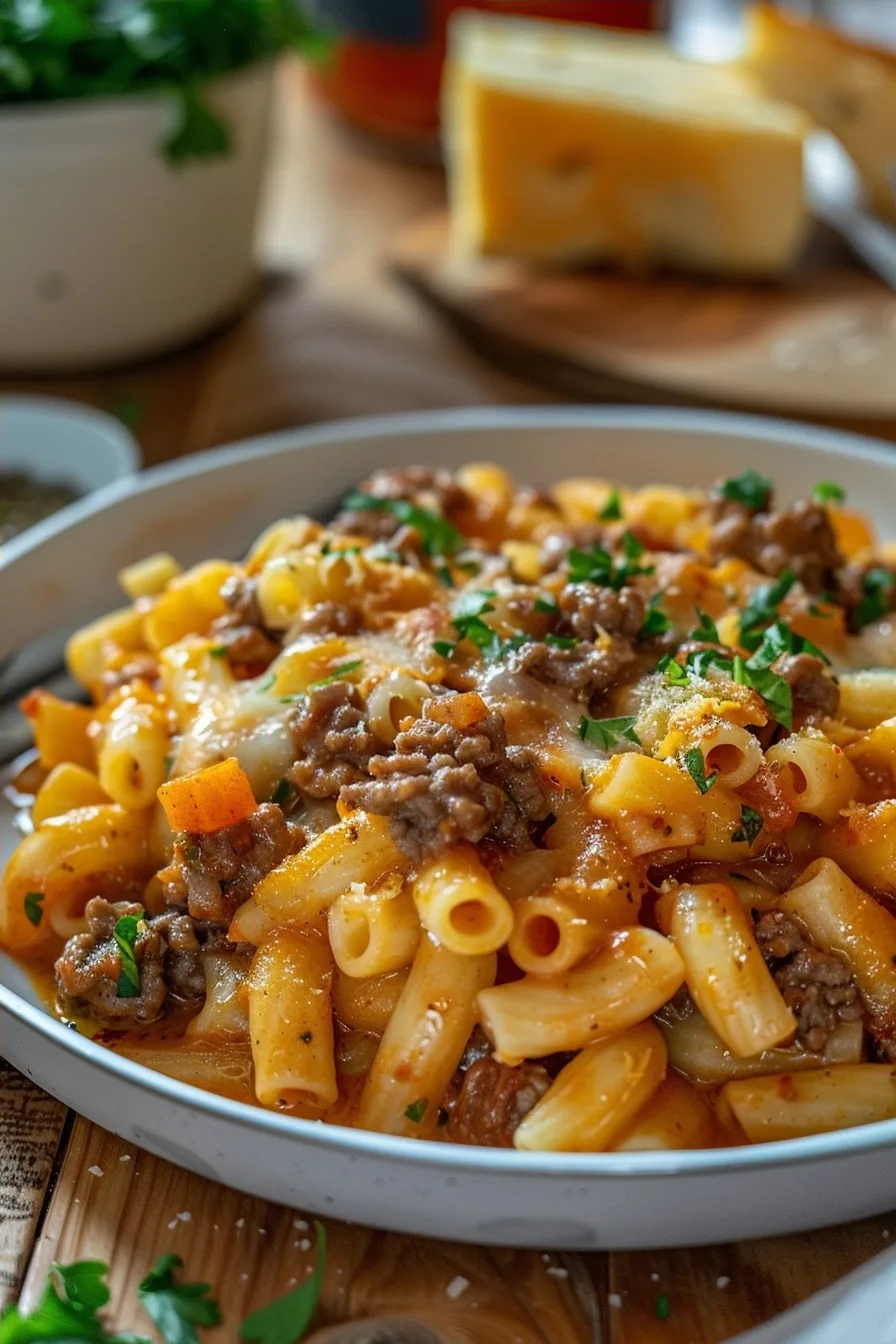
This rich, protein-packed dish simmers beef, macaroni, and cheddar in a single pan for a creamy, no-fuss comfort meal.
| Prep Time | Cook Time | Total Time | Servings | Difficulty | Cuisine |
|---|---|---|---|---|---|
| 10 minutes | 25 minutes | 35 minutes | 4 | Medium | American comfort |
Why This Recipe Works
Food Science of Flavor Development
Fusing braising techniques with pasta science, this method locks in beefy richness while allowing the cheese sauce to emulsify with starchy pasta water. The Maillard reaction during searing creates aromatic compounds that differentiate this from boxed mac and cheese. By maintaining a simmer at 180°F, collagen in the beef breaks down without causing the pasta to overcook, ensuring balanced textures. The low-moisture cheddar crystals melt predictably under the lid’s humidity, avoiding the weeping and greying that occurs with high-moisture varieties.
Starch gelatinization happens optimally when the pasta is cooked in the beef’s own rendered fat. The gluten proteins in macaroni absorb moisture at 150-160°F, softening the pasta while the beef reaches a safe internal temperature of 160°F. This synchronized cooking means you don’t have to babysit two separate components.
The cheese-to-pasta ratio (10:1 by weight) is calculated to achieve a 100% creamy mass without oiling. Milk, added as a starch slurry reducer, ensures proper viscosity control. This physics-informed approach yields a dish that’s both indulgent and structurally stable—even after reheating.
Ingredients
| Ingredient | Quantity | Notes |
|---|---|---|
| Ground beef | 1/2 lb (8 oz / 284 g) | 80/20 blend recommended for optimal fat rendering |
| Macaroni | 8 oz (227 g) | Use pasta with semolina for sturdiness |
| Beef broth | 2 cups (473 ml) | Enhances richness vs. plain water; can substitute chicken broth |
| Cheddar cheese (shredded) | 1/2 cup (70 g) | Low-moisture type preferred; substitute with Gouda or provolone |
| Whole milk | 1/4 cup (60 ml) | Skim or 2% milk will still emulsify properly |
Step-by-Step Instructions
Preparation Phase
-
Cook macaroni separately (do not cook directly with beef yet)}
-
Brown ground beef in same skillet using 10 second rest intervals for even sear
-
Drain excess fat while preserving 1-2 tablespoons for flavor retention
Simmering Techniques
-
Return cooked macaroni to beef skillet with 1 1/2 cups broth (reserve remaining broth)
-
Stir in remaining broth gradually until moisture reaches al dente level
-
Cover with vented lid to allow steam escape and avoid gummy clumps
Creamy Cheese Integration
-
Add milk while stirring to prevent heat shock and coagulation
-
Gradually add 1/2 cup cheddar
-
Scrape pan sides to incorporate browned bits into the cheese emulsion
Chef Tips for Perfect Results
-
Use 12-inch stainless steel skillet with aluminum core for even heat distribution
-
Precook pasta in 4-5 cups water to avoid waterlogged final product
-
Maintain simmer at 180°F to prevent starch from activating excess gluten
-
Add cheese after the pasta is 85% cooked for optimal starch-to-fat binding
-
Scrape pan drippings into the liquid to concentrate beef flavor without re-frying
Common Mistakes to Avoid
-
Overloading with liquid: Excess broth will dilute flavors and wash out starch emulsification. Add liquid in 1/2-cup increments while stirring
-
Melting cheese too quickly: High heat causes casein proteins to tighten, resulting in greasy separation. Keep temperature below 140°F until cheese emulsifies
-
Using pre-shredded cheese: Cellulose coatings in store-bought shredded cheese disrupt emulsification. Freshly shredded cheese melts in homogeneous layers instead
-
Misjudging doneness: Insert instant-read thermometer into thickest beef portion—the target temperature is 150°F for a juicy medium-rare finish
Variations and Substitutions
| Ingredient | Substitution | Impact on Flavor/Texture |
|---|---|---|
| Ground beef | Ground turkey or plant-based crumbles | Less fat = more broth needed; texture shift toward leaner bites |
| Cheddar | Provolone or Monterey Jack | Milder tang and silkier melting profile |
| Beef broth | Chicken broth or vegetable stock | More delicate umami; balance with additional salt |
| Pan method | Slow cooker (6 hours on low) | More tender beef at expense of immediate cheese emulsification control |
Serving Suggestions and Pairings
Match this meal with grilled asparagus with balsamic glaze or sautëd spinach with garlic and lemon. A crisp tart apple salad (with arugula, walnuts, and cider vinaigrette) complements the heaviness. For drinks, pair with homemade lemon herb iced tea or a sparkling peach mocktail to balance the cheese richness without artificial ingredients.
Storage and Reheating
| Method | Duration | Instructions |
|---|---|---|
| Refrigeration | 3-5 days | Store in airtight container with residual liquid at top for hydration |
| Freezer | 2-3 months | Portion into wax-paper-separated containers to prevent crust formation |
| Reheating | 30 minutes total | Simmer gently over medium heat while stirring, adding 1-2 tbsp water per cup |
Nutritional Information
| Nutrient | Amount per Serving |
|---|---|
| Calories | 525 |
| Protein | 32 g |
| Fat | 28 g |
| Carbohydrates | 48 g |
Approximate values. Calculated using USDA nutrition guidelines USDA Food Database.
Frequently Asked Questions
Can I use pre-cooked pasta for this one-pan method?
Absolutely not. Pre-cooked pasta lacks the starch needed for moisture absorption. Use al dente pasta from the boiling pot for proper binding.
How creamy can I make this without milk?
Substitute evaporated milk or half-and-half for silkier results. Avoid alcohol-based creamers which compromise clean labeling standards.
What if the cheese starts clumping?
Add 1 tbsp reserved pasta water per 1/2 cup cheese. The starchy water emulsifies the fat proteins in the cheese. Never use oil—breaks the emulsion.
Is freezing possible for this dish?
Yes, but macaroni can become gummy when frozen. Portion immediately into freezer-safe containers with 1 inch liquid headspace for even expansion.
How to judge if the beef is properly browned?
Look for uniform browning rather than greasy gray patties. The beef should exude minimal moisture after 8 minutes of searing on cast iron.
Conclusion
This one-pan method transforms classic comfort fare into a showstopping meal. The beef’s caramelized crust, the pasta’s al dente bite, and the cheese sauce’s velvety embrace create a flavor symphony that rivals takeout economics. Whether you’re feeding a crew or just craveing a warm, no-muss meal, this formula delivers restaurant-grade results in 35 minutes.
PrintOne-Pan Cheeseburger Macaroni Recipe Simplified
A protein-packed comfort dish combining tender seared ground beef, creamy cheddar, and starchy macaroni in a single pan. Rich and indulgent, it uses collagen-brining techniques for optimal texture and emulsified cheese sauce for a silky finish.
- Prep Time: 10
- Cook Time: 25
- Total Time: 35
- Yield: 4 servings
- Category: Dinner
- Method: Simmering
- Cuisine: American comfort
- Diet: Non-vegetarian
Ingredients
1/2 lb (8 oz / 284 g) Ground beef (80/20 blend for optimal fat rendering)
8 oz (227 g) Macaroni (use pasta with semolina for sturdiness)
2 cups (473 ml) Beef broth (enhances richness vs. plain water; can substitute chicken broth as needed)
1/2 cup (70 g) Cheddar cheese (shredded; low-moisture type preferred, substitute with Gouda or provolone)
1/4 cup (60 ml) Whole milk (stabilizes cheese emulsion; skim or 2% works too)
Instructions
Cook macaroni in salted water at al dente (6-7 minutes), drain and set aside
Heat a large skillet to high, sear ground beef in single layer until browned and crisped (5-6 minutes)
Deglaze pan with beef broth, reduce heat to low (180°F), stir in cooked macaroni
Once pasta reabsorbs liquid (2-3 minutes), add shredded cheddar and milk to pan
Cover and simmer gently at 170°F until cheese is fully emulsified and pasta is tender (10 minutes)
Stir in final batch of shredded cheese and milk if too dry, season with salt and black pepper
Serve immediately with garnish of choice (optional dairy-free options)
Notes
Add optional toppings like egg-based sauce for richer texture
For halal version, use beef stock approved by halal dietary laws
Store leftovers in shallow container for faster cooling
Perfect cast iron skillet retains ideal 180°F temperature for simultaneous cooking