

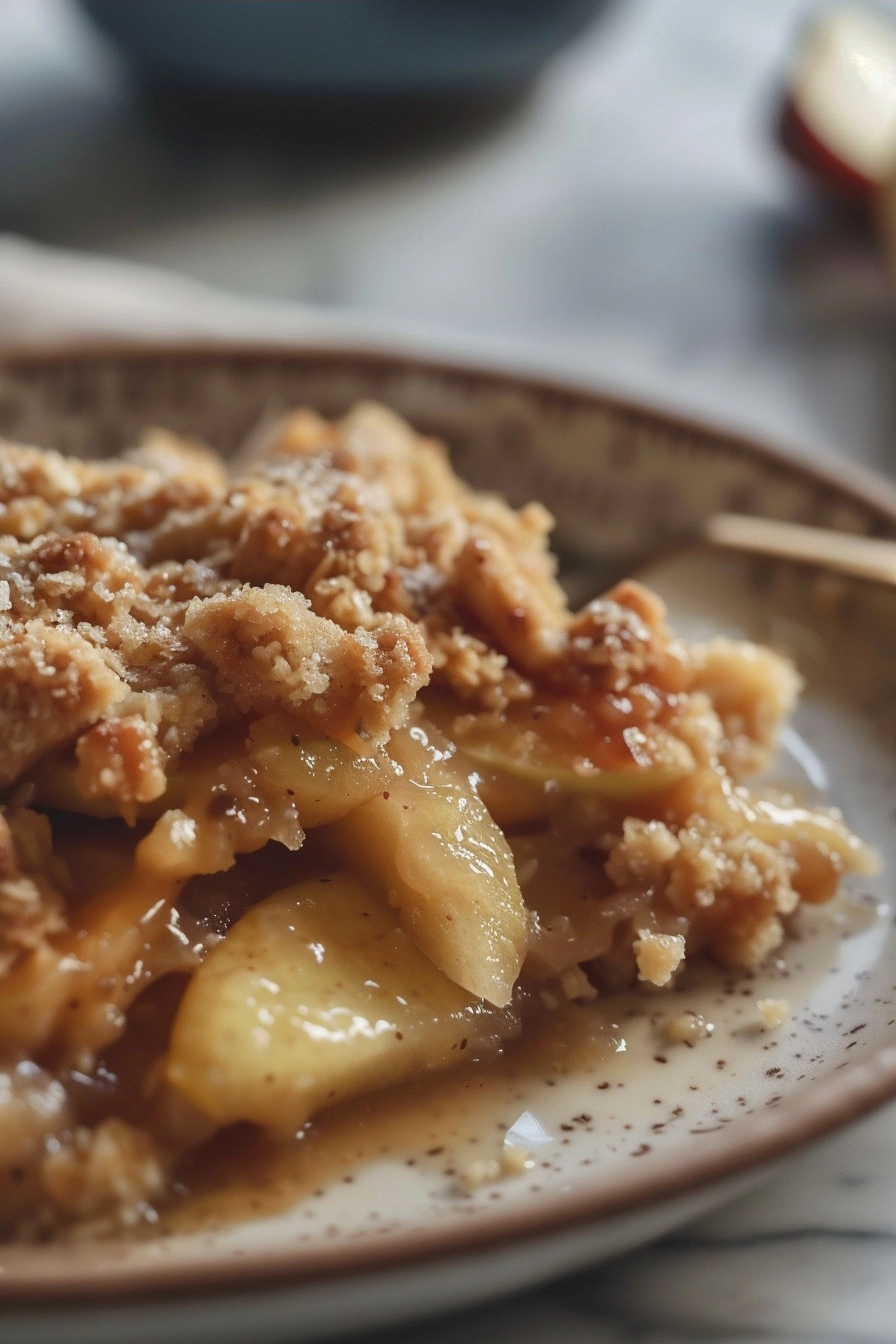
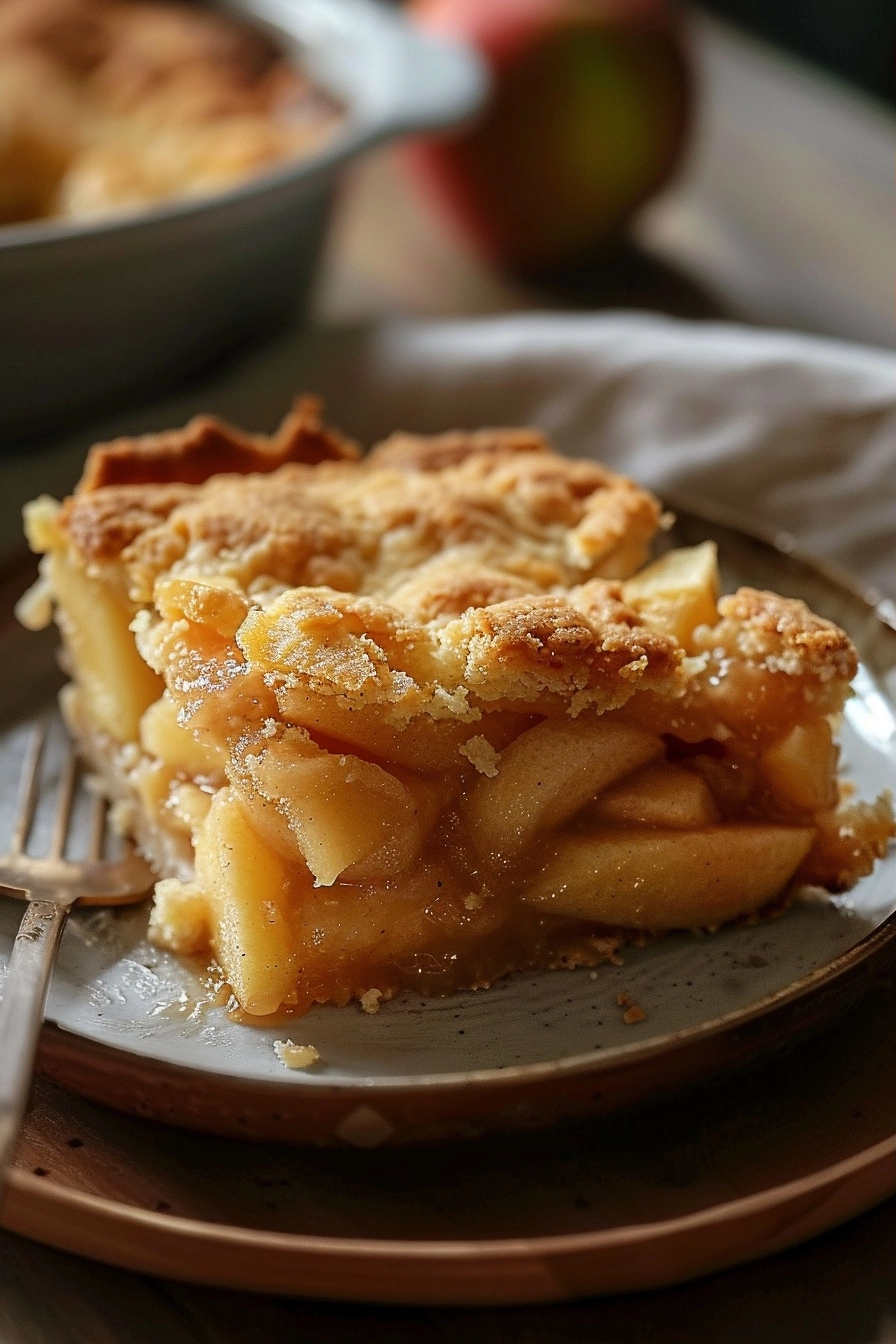
Apple cobbler is a quintessential, rustic dessert with a perfectly golden top that crackles under the fork and a tender underbake resting on stewed, spiced apples. It’s a one-pan wonder that captures the essence of American comfort food with its deep cinnamon aroma and warm crumbly texture.
Apple cobbler is an irresistible blend of apples—peeled, sliced, and spiced with brown sugar and cinnamon—baked under a buttery, sugar-dusted flour and milk-based batter. It’s a dessert that balances the natural tartness of apples with caramelized sweetness, and its simplicity makes it a kitchen staple for any baker. The dish is beloved for its no-fuss preparation and its ability to adapt to whatever apples you have on hand, but the true magic lies in the structure of that crackling, golden crust.
| Prep Time | Cook Time | Total Time | Servings | Difficulty | Cuisine |
|---|---|---|---|---|---|
| 15 mins | 45 mins | 1 hour | 6-8 | Easy | American |
Why This Recipe Works
This version of apple cobbler isn’t just about taste—it’s about control of texture, flavor layering, and temperature dynamics. The first thing you’ll notice is that we’re using brown sugar, which isn’t just about sweetness: it’s a flavor amplifier. Through the Maillard reaction, it caramelizes on the surface during baking to give the apples a rich, nutty depth. This is where the recipe’s brilliance begins. Brown sugar also contributes invert sugars, which help maintain moisture in the core while allowing the top to achieve a firm, crackled crust.
Baking the apples at the same time as the batter, without stirring, creates two distinct phases in the dish—one is a delicate custard-like batter that sets gently from the bottom up, while the top forms a custard crust through evaporation and surface caramelization. The high percentage of milk versus flour in the batter also creates a custard mouthfeel, a subtle but profound shift from the typical biscuit-style topping you might associate with apple pie or other cobblers. This is the key to the dish’s soft texture and melt-in-your-mouth quality.
In addition to that, we are using 3/4 cup melted butter. This is deliberate for two reasons: one, to ensure the apples have a fat-rich base that prevents sticking and allows them to stew in their juices; second, the butter adds a deep, buttery note to the apples during the initial caramelization phase, even before they hit the oven. This kind of controlled fat integration ensures the dish is neither soggy nor dry.
Ingredients
| Ingredient | Quantity | Notes |
|---|---|---|
| Apples (peeled and sliced) | 4 cups | Use a mix of Granny Smith and Honeycrisp for crisp texture and tang |
| Brown sugar | 1/2 cup | Packed firmly to retain moisture during baking |
| Cinnamon | 1 tsp | Ground cinnamon with a bit of nutmeg for warmth |
| All-purpose flour | 1 cup | Room temperature for even mixing |
| Sugar | 1 cup | Granulated sugar for browning and texture |
| Baking powder | 1 tsp | Ensures light rise in the batter |
| Milk | 3/4 cup | Whole milk preferred for moisture |
| Melted butter | 1/2 cup | Unsalted for control of sodium |
Step-by-Step Instructions
Prepping the Filling
- Preheat your oven to 350°F (175°C).
- Peel and slice four medium apples into 1/4-inch thick rounds or chunks.
- In a large bowl, combine the apples, 1/2 cup brown sugar, and 1 teaspoon cinnamon. Toss well to evenly coat the apples.
- Transfer the apple mixture into a deep 9 x 13-inch baking dish. You want them to sit in a single layer with a bit of space between. This allows them to caramelizes evenly and retain shape.
Making the Batter
- In a separate mixing bowl, add the flour, 1 cup granulated sugar, and the baking powder. Whisk to combine. These dry ingredients form the base of your custard-like top.
- Slowly add the 3/4 cup of whole milk while whisking continuously until a smooth mixture forms. The batter should be slightly thick but fluid—like a custard rather than a dough. It should pour easily but still coat the back of a fork. This is important for proper texture.
Assembling and Baking
- Pour the melted butter over the apples. Make sure it coats the bottom and sides of the baking dish to ensure the apples don’t stick and to provide a glossy, rich base.
- Pour the batter evenly over the apples. Again, do not stir or move the apples around. This ensures that the apples stay on the bottom and the batter rises up around them in a custard-like way.
- Cover and bake for the first 15 minutes at 350°F. Then remove the cover and bake for another 30–35 minutes until the top is a deep golden color and the edges begin to pull away from the sides of the dish. The internal temperature should be at least 200°F to ensure full set of the custard layer.
Chef Tips for Perfect Results
- Controlled caramelization: To prevent the apples from becoming overly soft, cook them under the batter without stirring after pouring. This method allows the apples to stew gently in their juices while the batter sets above.
- Moisture balance: The milk in the batter prevents the filling from drying out while still promoting a golden top. Don’t substitute skim milk; fat is key.
- Battery integration: You can gently swirl a spoon through the batter before baking to incorporate air and create a lighter, fluffier top if you like a more custardlike texture.
- Monitoring for doneness: The top should be golden brown and spring back slightly when pressed. If the top browns too quickly, cover lightly with aluminum foil to allow the center to set.
- Texture contrast: A cold apple base (refrigerated for 20 minutes) will help maintain shape and create a clear separation between the apples and the custard top for the most distinct flavor profile.
Common Mistakes to Avoid
- Overworking the batter: This creates a stiffer, more bread-like texture rather than the desired custard. Keep mixing to a gentle stir and pour.
- Adding too much sugar: It can mask the apple flavor and draw too much moisture out of the fruit, leading to a dry, unappealing dish. Strictly follow the sugar ratios.
- Stirring the apples into the batter: This causes the fruit to become too soft and blend into the custard layer, making the texture dull and muddy.
- Using low-fat milk: The milk’s fat content contributes to both richness and structure. Low-fat versions can lead to a gummy consistency in the top layer.
Variations and Substitutions
| Ingredient | Substitution | Impact on Flavor/Texture |
|---|---|---|
| Apples | Pears or peaches | Creamier texture; subtle flavor change but still works in the custard structure |
| Brown sugar | Coconut sugar or maple syrup | Slight change in caramelization profile but works well in small quantities |
| Baking powder | Baking soda + acid (lemon juice or vinegar) | Creates a slightly more risen and cake-like texture |
| Milk | Plant-based milk (oat, almond) | Less rich, but still functions in recipe; add a touch of coconut oil for mouthfeel |
Serving Suggestions and Pairings
For a refined take on this dessert, serve slices with a swirl of rich vanilla ice cream and a drizzle of spiced apple reduction. Apple cobbler is particularly delightful during the fall or winter months but can be adapted year-round.
Classic pairings include spiced coffee, a glass of spiced apple cider, or a sweet tea with hints of cinnamon and clove. For an upscale presentation, offer it at a Sunday brunch alongside pancakes or waffles. Alternatively, try serving it with a side of toasted marshmallows for a cozy campfire meal.
Storage and Reheating
| Method | Duration | Instructions |
|---|---|---|
| Refrigeration | 3-4 days | Store in an airtight container. Reheat at 350°F for 10-15 minutes. Avoid stacking hot slices to prevent sogginess. |
| Frozen | 2-3 months | Wrap individually in plastic and place in a heavy-duty freezer bag. Thaw overnight in the fridge, then heat in the oven as above. |
Nutritional Information
| Nutrient | Amount per Serving (1/8 of recipe) |
|---|---|
| Calories | 240 |
| Protein | 3 g |
| Fat | 8 g |
| Carbohydrates | 40 g |
| Fiber | 2 g |
| Sugar | 23 g |
| Sodium | 200 mg |
| Approximate values. |
Frequently Asked Questions
Can I use a different type of apple other than Granny Smith or Honeycrisp?
Yes, you can use other apple varieties such as Fuji or Jonagold. The key is to choose apples with a firm, somewhat tart or sweet balance. Avoid overly soft apples like Red Delicious as they become mushy too quickly and lose their shape.
My cobbler came out too dry. What did I do wrong?
Overbaking or using a baking dish that is too large can cause dryness. Ensure your oven is preheated correctly and follow the suggested baking times. Also, check that the batter was not overmixed, as this can change its density and reduce moisture retention.
Can I make the batter in advance?
Absolutely, but for best results, mix and pour the batter the same day you plan to serve. The baking powder is most active when first mixed. If you refrigerate the batter, give it a gentle stir before using to redistribute the baking powder.
Is it possible to freeze this apple cobbler?
Yes, freezing is possible and recommended if you’re making it in advance. Wrap the cobbler tightly in aluminum foil or plastic wrap, then place in an airtight container. When reheating, allow it to come to room temperature and then warm it gently in the oven to avoid rubbery texture.
Can I add nuts or other toppings to the batter?
Gently folding in chopped walnuts or pecans can add a nutty crunch and depth of flavor. However, do not add before pouring the batter; it will disrupt the custard structure. Instead, sprinkle a small amount over the top just before baking to ensure even distribution and a toasty finish.
Conclusion
Apple cobbler is more than a dessert—it’s a celebration of warmth, texture, and flavor, all achieved in one single baking dish. With this recipe, you’re getting both a timeless classic and a refined take that respects the original while pushing it into new territory through texture and temperature control. Each bite offers the soft apples simmered in rich cinnamon and butter, all encased in a gently rising, golden custard top that glistens with caramelization. It’s a dessert that invites second helpings and will become a mainstay in your kitchen.
Apple Cobbler: A Classic American Dessert Recipe
Apple cobbler is a golden, crumbly dessert layered over spiced, stewed apples. This no-fuss, one-pan version features a butter-rich crumbly topping and a tender custard-like base for a perfect balance of texture and flavor.
- Prep Time: 15
- Cook Time: 45
- Total Time: 60
- Yield: 6-8 servings
- Category: Dessert
- Method: Baking
- Cuisine: American
- Diet: Vegetarian
Ingredients
4 cups peeled and sliced apples, a mix of Granny Smith and Honeycrisp
3/4 cup melted butter
1 cup brown sugar
1 tablespoon ground cinnamon
2 cups all-purpose flour
1 cup whole milk
1/2 teaspoon salt
1/2 teaspoon nutmeg (optional)
1/4 teaspoon ground cardamom (optional)
Instructions
Preheat the oven to 375°F (190°C). Grease a 9×13-inch oven-safe dish or cast iron skillet.
In a large bowl, mix melted butter into brown sugar until combined. Add cinnamon, nutmeg, and cardamom if using.
Add sliced apples to the bowl and stir gently until well coated. Pour this mixture into the prepared dish.
In a separate bowl, combine flour, salt, and the remaining melted butter. Gradually stir in milk to create a custard-like batter.
Pour the batter evenly over the top of the spiced apple mixture.
Bake for 45 minutes or until the top is golden and bubbly, and the apples are tender when pierced with a fork.
Let cool slightly before serving.
Notes
Use any apple variety you prefer, but a mix of tart and sweet apples yields the best flavor.
For a vegan version, substitute vegan butter for regular butter.
Serve warm with a scoop of vanilla ice cream for a classic touch.