

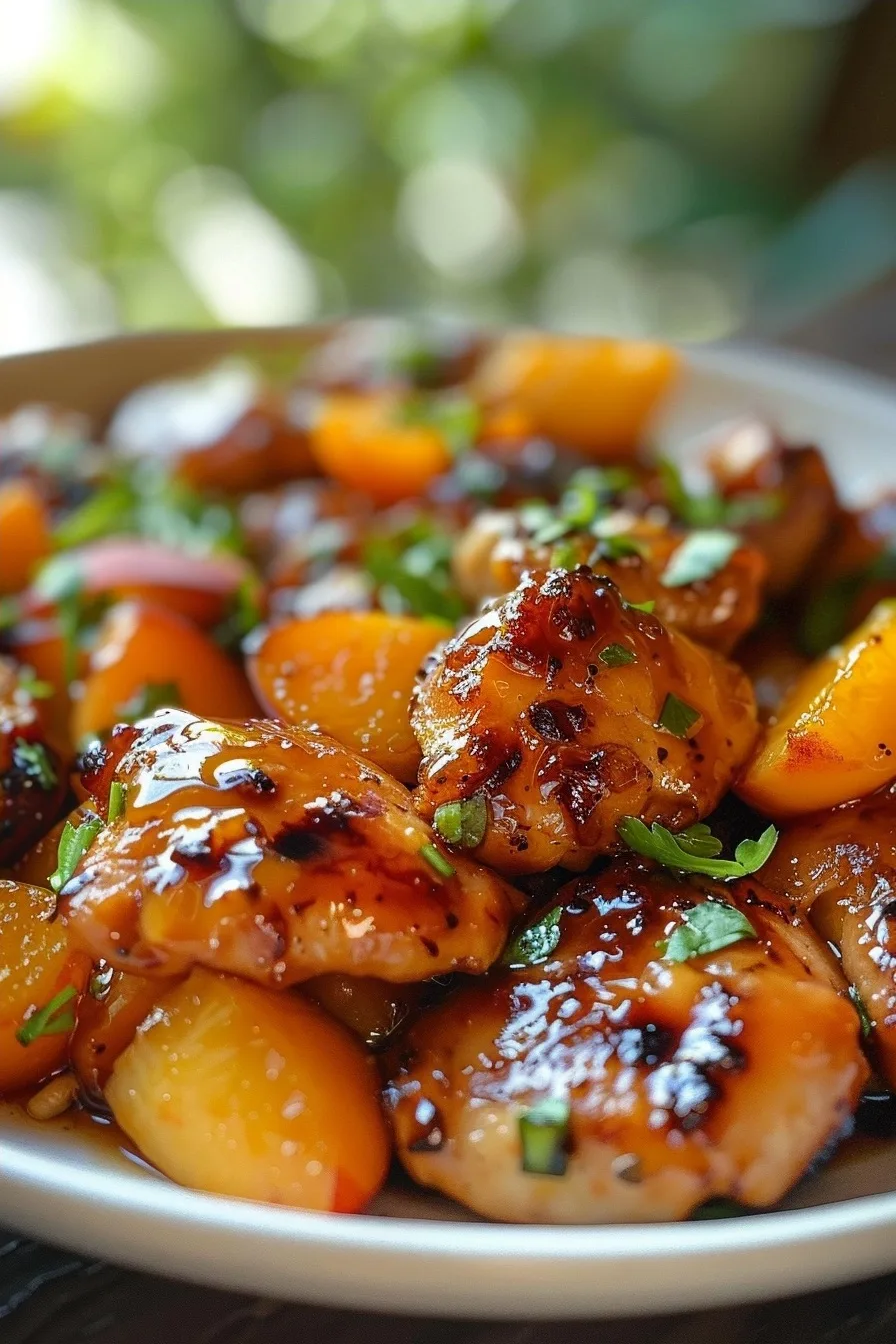
30-Min Summer Peach Glazed Chicken combines juicy, pan-seared breasts with a vibrant, fruit-forward reduction that brings summer flavors to your kitchen. By utilizing the natural sugars in high-quality peach preserves paired with the sharp acidity of balsamic vinegar, you create a complex, professional-grade glaze in half an hour. This specific method focuses on rapid protein denaturation and precise sugar caramelization to ensure the chicken stays succulent while developing a caramelized exterior.
| Category | Details |
|---|---|
| Prep Time | 5 minutes |
| Cook Time | 25 minutes |
| Total Time | 30 minutes |
| Servings | 4 servings |
| Difficulty | Easy |
| Cuisine | Modern American |
Why This Recipe Works
The secret to this dish lies in the Maillard reaction. When you sear chicken breasts at high heat, you initiate this chemical process, resulting in deeper color and complex savory molecules. A hot pan is the base of all successful poultry preparation, and ensuring the meat is patted dry before hitting the oil is vital for achieving that golden crust.
From a food science perspective, the glaze functions as a simple reduction. The pectin found in peach preserves provides structure, while the balsamic vinegar balances the overwhelming sweetness by adding acetic acid. This acid cuts through the protein fibers, tenderizing the meat while simultaneously creating a glossy, sticky coating that clings perfectly to the surface of the chicken.
My method avoids flour or cornstarch thickeners, relying instead on the reduction of sugars and fruit solids. By finishing the chicken in the glaze, you allow the heat to penetrate the reduced liquid, turning it into a protective lacquer. This ensures the breast remains moist, preventing the dry, fibrous texture often associated with quick-cooking poultry.
Ingredients
| Ingredient | Quantity | Notes |
|---|---|---|
| Chicken Breast | 1 lb (450g) | Boneless, skinless, sliced into even strips. |
| Peach Preserves | 1 cup (300g) | High-quality fruit preserves, no high-fructose corn syrup. |
| Balsamic Vinegar | 1 tbsp (15ml) | Adds necessary acidity and depth. |
| Dried Thyme | 1 tsp (2g) | Provides earthy, savory contrast to the sweetness. |
| Olive Oil | 2 tbsp (30ml) | Extra virgin for searing. |
| Kosher Salt | to taste | Use standard sea salt as an alternative. |
| Black Pepper | to taste | Freshly cracked for best flavor. |
Step-by-Step Instructions
Follow these precise steps to manage heat distribution and glaze consistency.
Prep Phase
-
Slice the chicken breasts into 1-inch thick strips to ensure uniform cooking speed across the entire batch.
-
Pat the chicken strips thoroughly with a paper towel to remove surface moisture, which allows for immediate browning.
-
Season the strips evenly on both sides with kosher salt and black pepper while the pan heats.
Searing Phase
-
Heat the olive oil in a stainless steel or cast-iron skillet over medium-high heat until the oil begins to shimmer.
-
Place the chicken strips in the pan, avoiding overcrowding, as this drops the temperature and prevents proper searing.
-
Sear the chicken for 3 to 4 minutes per side until the internal temperature reaches 160°F (71°C) at the thickest point via a USDA food safety thermometer.
Glaze Reduction Phase
-
Whisk together the peach preserves, balsamic vinegar, and dried thyme in a small bowl until completely combined.
-
Pour the mixture directly into the skillet, reducing the heat to medium-low to prevent the sugars from burning or carbonizing.
-
Simmer for 3 to 5 minutes, basting the chicken frequently, until the liquid reduces to a glossy, thick consistency that coats the back of a spoon.
-
Remove from heat immediately and serve while the glaze is at its peak viscosity.
Chef Tips for Perfect Results
-
Always use high-quality preserves; those with whole fruit chunks offer a better texture.
-
A heavy-bottomed pan retains heat better, leading to even browning and fewer burnt spots.
-
Check internal temperature early; poultry cooks faster than many realize, and overshooting 165°F will cause moisture loss.
-
Warm the plate before serving to keep the glaze at the correct consistency.
-
Basting with a spoon during the reduction phase adds oxygen to the glaze, which helps intensify the caramel color.
Common Mistakes to Avoid
-
Overcrowding the pan results in steaming rather than searing, leaving the chicken pale and rubbery.
-
High heat during the glazing process turns fruit sugars into bitter, burnt carbon.
-
Using cold chicken straight from the refrigerator creates a sudden, massive drop in pan temperature.
-
Failing to rest the meat for three minutes; resting allows protein fibers to reabsorb juices.
Variations and Substitutions
| Ingredient | Substitution | Impact |
|---|---|---|
| Thyme | Fresh Rosemary | Adds piney, bolder woodsy notes. |
| Balsamic Vinegar | Apple Cider Vinegar | Provides a brighter, less syrupy tang. |
| Chicken Breast | Chicken Thighs | Increased fat content leads to more succulent results. |
Serving Suggestions and Pairings
Pair this dish with a crisp wild rice blend or roasted asparagus to balance the sweetness of the glaze. A side of smashed herb-roasted baby potatoes creates a hearty dinner profile. For a lighter approach, serve over a bed of baby arugula lightly dressed with olive oil and extra balsamic. A well-chilled glass of sparkling water infused with fresh lemon and basil is an excellent non-alcoholic pairing.
Storage and Reheating
| Method | Duration | Instructions |
|---|---|---|
| Refrigerator | 3 days | Store in an airtight container to prevent dehydration. |
| Reheating | Stovetop | Warm on low heat with a teaspoon of water to reconstitute the glaze. |
Nutritional Information (Approximate values per serving)
| Nutrient | Amount |
|---|---|
| Calories | 310 kcal |
| Protein | 26g |
| Fat | 8g |
| Carbohydrates | 34g |
| Sugar | 28g |
Frequently Asked Questions
Can I use fresh peaches instead of preserves?
You can use fresh peaches by simmering them separately with two tablespoons of honey and the vinegar until they soften into a jam-like consistency. Preserves are recommended for this recipe because they already contain the necessary pectin to provide structural stability to the glaze.
How do I know the chicken is fully cooked?
The chicken is safe when an instant-read thermometer inserted into the thickest part of the meat registers 165°F (74°C). Relying on visual cues like white centers is less accurate than mechanical verification for food safety purposes.
Can I freeze the leftovers?
Freezing is possible for up to one month, though the texture of the glaze may become slightly watery upon thawing. To mitigate this, reheat the dish gently in a saucepan to evaporate excess moisture and thicken the sauce once more.
Is the balsamic vinegar too strong?
The pairing of balsamic vinegar with sweet fruit preserves is a classic study in flavor balancing, meaning the sugar masks the harshness of the acid. If you find the flavor too intense, substitute the vinegar with rice wine vinegar for a milder, more floral effect.
How do I prevent the glaze from sticking to the pan?
Using a non-stick or well-seasoned cast-iron skillet significantly reduces the risk of sticking during the reduction process. If you notice the sugars starting to darken too quickly, add a tablespoon of chicken broth or water to temporarily cool the surface temperature.
Conclusion
Mastering this simple 30-Min Summer Peach Glazed Chicken provides a versatile tool for your culinary repertoire. The combination of caramelized, fruit-forward notes and the savory depth of seared poultry defines a perfect weeknight meal. You have successfully balanced acidity and sweetness through careful reduction, resulting in a dish that looks as professional as it tastes. Serve this warm, enjoy the aromatic profile of fresh thyme lifting the peach aroma, and appreciate the ease of a high-quality meal created in minimal time.
Print30-Min Summer Peach Glazed Chicken
Experience the perfect harmony of summer flavors with this quick and elegant dish. Juicy, pan-seared chicken breast strips are coated in a reduced peach and balsamic glaze that delivers a professional-grade, sticky, and glossy finish. By focusing on rapid searing and natural pectin reduction, this recipe yields succulent poultry without the need for heavy starches. It is an ideal, sophisticated meal for busy weeknights that celebrates fresh, fruit-forward profiles balanced by earthy herbs and sharp balsamic vinegar.
- Prep Time: 5
- Cook Time: 25
- Total Time: 30
- Yield: 4 servings
- Category: Dinner
- Method: Pan-searing and Reduction
- Cuisine: Modern American
- Diet: Halal
Ingredients
1 lb (450g) Chicken Breast, boneless and skinless, sliced into strips
1 cup (300g) High-quality Peach Preserves
1 tbsp (15ml) Balsamic Vinegar
1 tsp (2g) Dried Thyme
2 tbsp (30ml) Extra virgin olive oil
Kosher salt to taste
Black pepper to taste
Instructions
Pat the chicken strips dry with paper towels and season generously with salt and pepper.
Heat the olive oil in a large skillet over medium-high heat until shimmering.
Place the chicken in the pan in a single layer and sear without moving for 3-4 minutes until a deep golden crust forms.
Flip the chicken and cook for another 2-3 minutes until nearly cooked through.
Reduce the heat to medium-low and pour the peach preserves directly over the chicken.
Stir in the balsamic vinegar and dried thyme, tossing the chicken to coat thoroughly.
Simmer for 3-5 minutes, allowing the glaze to reduce into a thick lacquer that clings to the meat.
Remove from heat once the sauce is glossy and the chicken is fully cooked through and serve immediately.
Notes
Ensure the chicken is patted completely dry before searing to achieve the best Maillard reaction. Use high-quality preserves that do not contain high-fructose corn syrup for the cleanest flavor. If you prefer extra heat, add a pinch of crushed red pepper flakes to the glaze.