

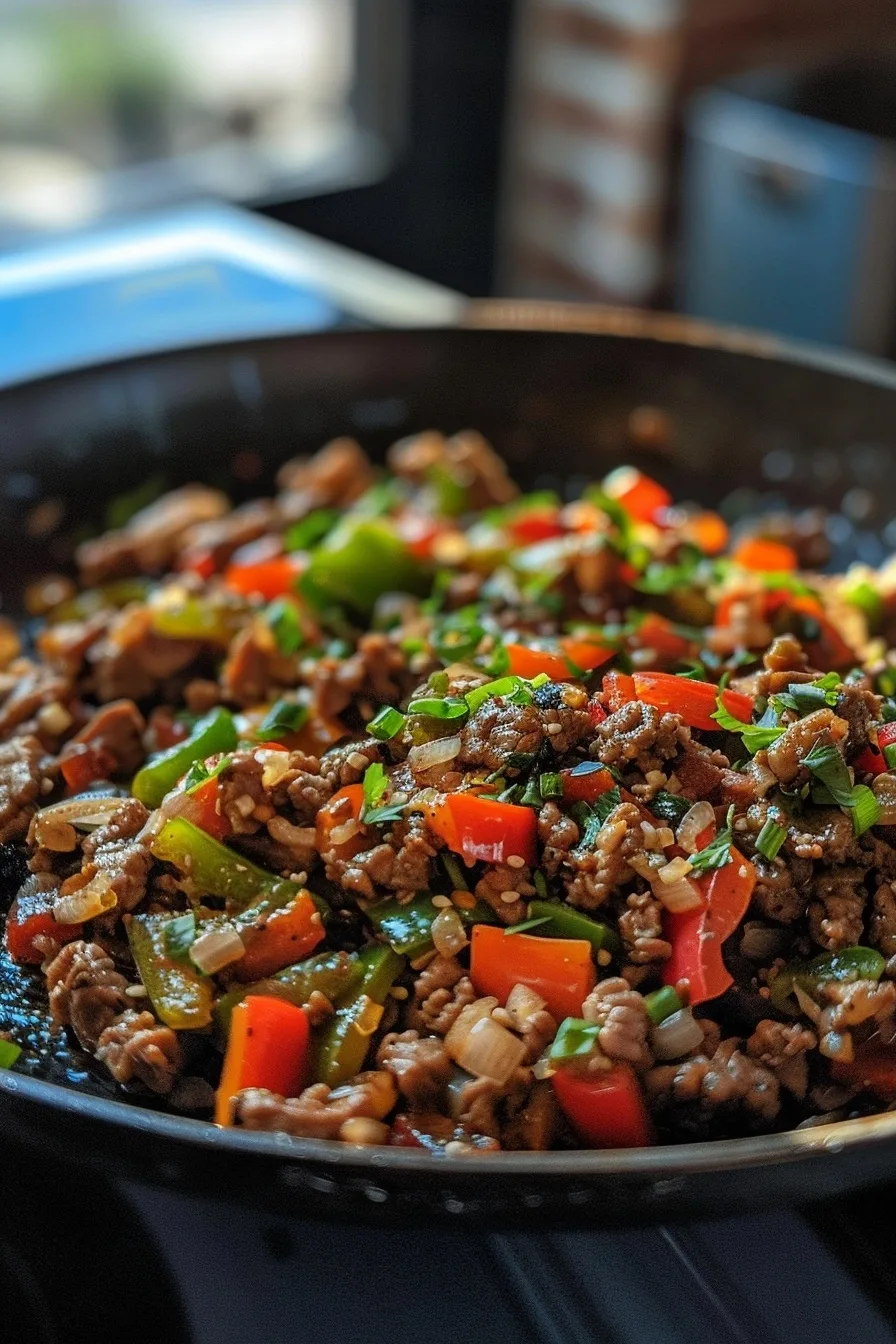
Better Than Restaurant: 20-Min Crispy Beef & Bell Pepper Skillet is a high-heat stir-fry technique designed to maximize the Maillard reaction for premium texture and flavor. This professional method yields tender, seared beef strips enveloped in a fragrant, umami-rich glaze alongside vibrant, crisp-tender bell peppers. Achieving professional-grade consistency at home relies on surface area management and precise control of high-temperature heat sources to lock in natural meat juices.
| Prep Time | Cook Time | Total Time | Servings | Difficulty | Cuisine |
|---|---|---|---|---|---|
| 10 min | 10 min | 20 min | 4 | Easy | Asian-Fusion |
Why This Recipe Works
The success of this dish lies in the separation of the searing and steaming processes. By heating the skillet to a smoking point before introducing the beef, we induce the Maillard reaction, which is the chemical transformation of amino acids and reducing sugars into complex flavor compounds. Crowding the pan leads to moisture release, which effectively steams the meat instead of searing it, resulting in a rubbery texture that we actively avoid by cooking in small, manageable batches.
We utilize bell peppers specifically for their structural cellulose content, which withstands high-heat exposure without collapsing into a mushy consistency. Incorporating ginger at the final stage of the aromatics phase ensures its volatile compounds, such as gingerol, remain pungent and fragrant rather than becoming bitter or burnt through extended exposure to high heat.
Finally, the soy sauce acts as a thin-viscosity glaze that coats the exterior of the ingredients without pooling at the base of the wok or pan. Because we avoid alcohol-based cooking wines, we achieve depth through the salt content of the soy sauce balanced by the natural sugars in the bell peppers, creating a savory profile that mirrors restaurant quality.
Ingredients
| Ingredient | Quantity | Notes |
|---|---|---|
| Beef flank or sirloin | 1 lb (450g) | Slice against the grain |
| Bell peppers | 2 large | Thinly julienned for even cooking |
| Soy sauce | 1 tbsp | Low-sodium is recommended |
| Fresh ginger | 1 tsp | Microplaned or minced |
| Neutral oil | 1 tbsp | Canola or grape seed oil |
Step-by-Step Instructions
Preparation
-
Slice the beef thinly against the grain to shorten muscle fibers for optimal tenderness.
-
Julienne the bell peppers into uniform strips to ensure they cook at the same rate.
-
Mince the fresh ginger finely to distribute its flavor evenly across the skillet surface.
Searing and Stir-Frying
-
Heat the oil in a heavy-bottomed skillet or wok over medium-high heat until it shimmers.
-
Add the beef strips in a single layer, ensuring no overlapping to encourage rapid searing.
-
Sear for 3 minutes without touching, allowing a deep crust to form before flipping.
-
Add the bell peppers and ginger to the skillet once the beef has achieved a brown crust.
-
Stir-fry for 3-4 minutes, tossing continuously until the peppers reach a crisp-tender state.
-
Stir in the soy sauce, coating all surfaces thoroughly for 30 seconds before removing from heat.
Chef Tips for Perfect Results
-
Always slice your beef against the grain; look for the direction of the muscle fibers and cut perpendicularly to them to ensure a tender bite.
-
Use a thermometer if you are unsure of doneness; beef should reach an internal temperature of 135F for medium-rare.
-
Keep your oil hot but not burning; if the oil smokes violently, remove it from the heat source for 30 seconds to recalibrate.
-
Dry your beef strips with paper towels before searing to prevent excess liquid from hitting the pan, which hinders the browning process.
-
Use a cast iron or carbon steel pan for optimal heat retention and distribution during the cooking cycle.
Common Mistakes to Avoid
-
Overcrowding the pan: This reduces the surface temperature of the metal, causing the beef to boil in its own juices rather than browning.
-
Under-slicing the vegetables: Uneven slices lead to some pieces being burnt while others remain raw, ruining the texture harmony.
-
Using excess liquid: Adding too much sauce at once causes the beef to lose its crisp edge and become soggy.
-
Skipping the drying step: Wet meat releases water into the pan, which prevents the essential browning reaction from occurring.
Variations and Substitutions
| Ingredient | Substitution | Impact |
|---|---|---|
| Bell Peppers | Snow peas or snap peas | Provides a similar crunch with a sweeter profile |
| Soy Sauce | Coconut aminos | Adds a slightly milder, sweeter flavor profile |
| Beef | Smoked turkey slices | Adds a subtle, savory depth without red meat |
Serving Suggestions and Pairings
Serve this dish over a bed of steamed jasmine rice or quinoa to absorb the savory drippings. For a low-carb alternative, a side of roasted bok choy or blanched broccoli provides a pleasant earthy contrast. Pair with a chilled sparking water infused with fresh cucumber and lime for a crisp, acidic refreshment.
Storage and Reheating
| Method | Duration | Technical Instructions |
|---|---|---|
| Refrigeration | 2-3 days | Store in an airtight glass container to prevent oxidation |
| Reheating | Stovetop | Reheat on medium heat with a teaspoon of water to restore moisture |
Nutritional Information
| Nutrient | Amount per Serving |
|---|---|
| Calories | 280 kcal |
| Protein | 25g |
| Fat | 14g |
| Carbohydrates | 8g |
| Fiber | 2g |
Frequently Asked Questions
Can I use a different cut of beef?
Yes, any tender cut like sirloin or flank works best as these have sufficient fat marbling to stay tender during quick searing.
How do I know if the beef is done?
The beef is cooked when it develops a deep crust on the exterior and loses its pink hue through the center, typically after three minutes per side.
Why did my vegetables turn mushy?
Vegetables lose their texture when the pan temperature drops; keep the heat at high and do not exceed the recommended cooking time for the peppers.
Can I prepare this in advance?
You can pre-slice the ingredients and store them separately to reduce cooking time, but the dish is best served immediately after the final sear.
How can I adjust the saltiness?
Reduce the amount of soy sauce used and substitute a portion with low-sodium chicken broth to maintain the liquid ratios without the sodium intensity.
Mastering this Better Than Restaurant: 20-Min Crispy Beef & Bell Pepper Skillet brings the efficiency of professional line cooking into your home kitchen. By prioritizing heat management and mindful preparation, you create a meal that defines high-quality, efficient cooking. Enjoy the perfectly seared, savory bite of the beef contrasted with the vibrant, crisp texture of garden-fresh peppers, making every mouthful a satisfying demonstration of culinary precision and taste.
PrintBetter Than Restaurant: 20-Min Crispy Beef & Bell Pepper Skillet
Experience restaurant-quality flavor with this fast, high-heat stir-fry. By searing thin strips of beef and crisp bell peppers in rapid succession, you achieve a deep umami flavor and a perfect texture without the need for alcohol or complex marinades. This dish relies on temperature control and quick cooking to lock in succulent juices while highlighting the natural sweetness of fresh aromatics.
- Prep Time: 10
- Cook Time: 10
- Total Time: 20
- Yield: 4 servings
- Category: Dinner
- Method: Stir-fry
- Cuisine: Asian-Fusion
- Diet: Halal
Ingredients
1 lb beef flank or sirloin, sliced against the grain
2 large bell peppers, julienned
1 tbsp low-sodium soy sauce
1 tsp fresh ginger, minced or microplaned
1 tbsp neutral oil (canola or grape seed oil)
Instructions
Slice the beef thinly against the grain to ensure tenderness.
Julienne the bell peppers into uniform strips for even heat distribution.
Mince the fresh ginger finely.
Heat the oil in a heavy-bottomed skillet or wok until shimmering and almost smoking.
Sear the beef in small batches to preserve high heat and build a charred crust.
Remove beef once seared and add the bell peppers to the skillet.
Cook bell peppers until crisp-tender.
Return the beef to the pan, toss in the ginger and soy sauce.
Stir-fry for another minute until everything is evenly coated and fragrant.
Notes
Always cut the beef against the grain to break up tough fibers. Avoid overcrowding the pan; if the pan loses too much heat, the beef will steam rather than sear. For maximum crispness, ensure the pan is at maximum heat before starting.