

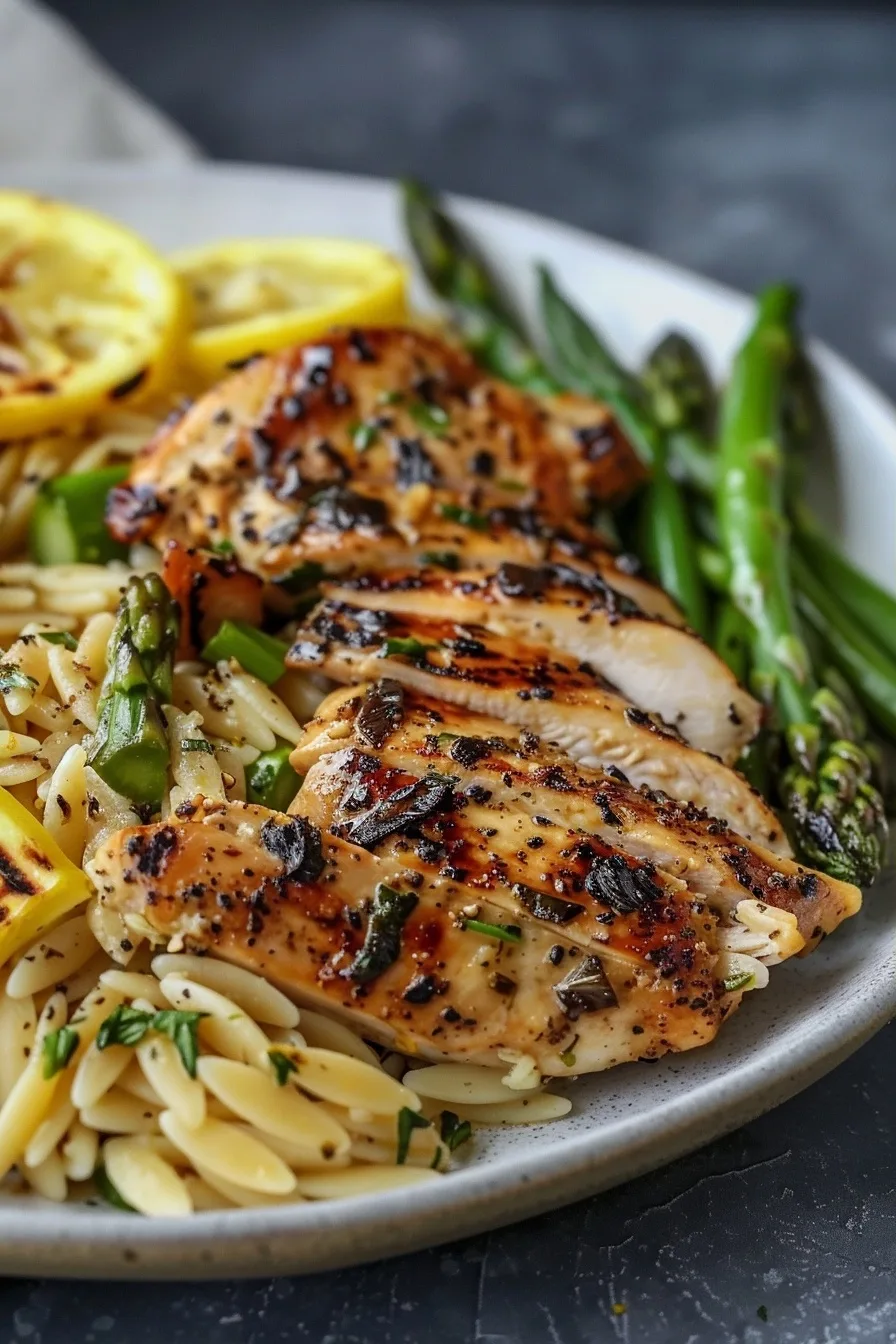
30-Minute Lemon Chicken Asparagus Orzo is a vibrant, one-pan meal that combines tender protein, starch, and seasonal vegetables for a complete dinner solution. This preparation relies on the rapid absorption of savory chicken broth by orzo pasta, resulting in a creamy texture without the need for heavy cream. By utilizing precise thermal manipulation and acidity management, this dish delivers sophisticated flavor profiles within a short timeframe suitable for busy home kitchens.
| Prep Time | Cook Time | Total Time | Servings | Difficulty | Cuisine |
|---|---|---|---|---|---|
| 10 mins | 20 mins | 30 mins | 4 | Easy | Modern American |
Why This Recipe Works
The culinary logic of this recipe rests on the starch-release properties of orzo. When simmering small pasta shapes directly in the cooking liquid, the starch molecules hydrate and gelatinize, thickening the broth into a light, satisfying sauce. This method, often associated with risotto, is significantly faster with orzo because the surface area of the pasta allows for rapid water uptake.
I utilize the Maillard reaction to build a deep foundation of flavor before any liquids are added. By searing the cubed chicken breast in a hot pan, I create complex melanoidins on the protein surface. This process adds a savory intensity that balances the sharp brightness of fresh lemon juice, ensuring that every bite feels complete and well-rounded.
My specific approach to vegetable management preserves the nutritional integrity of the asparagus. By introducing the asparagus in the final stage of cooking, I ensure partial denaturation of the chlorophyll and pectin. This results in an emerald green vegetable that keeps a delicate snap, providing a necessary textural contrast to the soft orzo and tender, juicy chicken pieces.
Ingredients
| Ingredient | Quantity | Notes |
|---|---|---|
| Chicken Breast | 1 lb (450g) | Cut into 1/2 inch cubes for even heat distribution. |
| Orzo Pasta | 1 cup (200g) | Standard semolina variety. |
| Asparagus | 1 cup (150g) | Trimmed and chopped into 1-inch lengths. |
| Chicken Broth | 3 cups (710ml) | Ensure a deep-flavored, sodium-balanced store-bought base. |
| Lemon Juice | 1/4 cup (60ml) | Freshly squeezed is mandatory for balancing acidity. |
| Olive Oil | 2 tbsp | High-smoke point oil for searing. |
| Sea Salt/Pepper | To taste | Enhance natural flavors. |
Step-by-Step Instructions
Phase 1: Controlled Searing
- Heat the olive oil in a heavy-bottomed skillet over medium-high heat until the oil shimmers.
- Season the cubed chicken with salt and pepper before placing it in the pan to avoid overcrowding.
- Sear the chicken until a deep golden hue develops, indicating the completion of the Maillard reaction.
Phase 2: Starch Gelatinization
- Deglaze the pan with the chicken broth to capture any browned bits of protein attached to the bottom.
- Add the dry orzo directly into the simmering broth and stir to combine.
- Simmer uncovered for ten minutes, allowing the pasta to absorb the broth while slowly releasing its surface starch to build a thickened sauce.
Phase 3: Vegetable Integration and Emulsification
- Fold in the chopped asparagus during the final three minutes of the orzo cook time.
- Remove the skillet from the heat once the asparagus retains a firm, crisp bite.
- Stir in the fresh lemon juice, allowing the acidity to brighten the starch base and provide a clean finish to the dish.
Chef Tips for Perfect Results
- Use a wide skillet to ensure the chicken sits in a single layer, which prevents steaming and promotes proper browning.
- Test for al dente pasta by biting a grain of orzo; it should have a slight, firm resistance in the center.
- Temperature management is essential; high heat causes the chicken to become fibrous, so maintain a steady simmer during the orzo stage.
- For extra depth, zest the lemon before juicing it, and stir the zest in at the very end to maximize the volatile aromatic oils.
- Allow the dish to rest for two minutes off the heat after adding the lemon, as this enables the sauce to settle and fully coat the pasta.
Common Mistakes to Avoid
- Overcooking the orzo leads to a gummy texture because the pasta continues to absorb moisture even after being removed from the heat source.
- Adding the asparagus too early causes the stalks to lose their structural viability and bright green pigment, resulting in a dull dish.
- Crowding the pan with too much chicken prevents the temperature from staying high, which leads to gray, boiled chicken instead of a flavorful sear.
- Using low-sodium broth without adjusting personal salt levels can leave the dish feeling bland, as starch tends to dilute flavor profiles significantly.
Variations and Substitutions
| Ingredient | Substitution | Impact |
|---|---|---|
| Chicken Breast | Turkey breast | Similar protein density and lean profile. |
| Chicken Broth | Vegetable broth | Adds a slightly sweeter profile with less savory finish. |
| Lemon | Apple cider vinegar | Provides acidity but lacks the specific citrus essential oils. |
| Asparagus | Green peas | Increases starchiness and adds sweetness to the final texture. |
Serving Suggestions and Pairings
This dish performs exceptionally well when served in wide, shallow bowls to showcase the color contrast between the emerald asparagus and the golden orzo. Pair this meal with a crisp side salad featuring baby arugula, shaved fennel, and a light olive oil vinaigrette to complement the citrus notes. For a beverage pairing, a sparkling water with a sprig of fresh mint or a chilled cucumber-infused ice tea provides the necessary palate-cleansing contrast to the savory starch.
Storage and Reheating
| Method | Duration | Technical Instructions |
|---|---|---|
| Refrigeration | 3 days | Store in an airtight container to prevent moisture loss. |
| Reheating | Stovetop | Add two tablespoons of water to the pan to re-hydrate the pasta. |
Nutritional Information
Approximate values per serving (based on 4 servings):
| Nutrient | Amount |
|---|---|
| Calories | 320 |
| Protein | 28g |
| Carbohydrates | 42g |
| Fat | 6g |
| Sodium | 450mg |
Frequently Asked Questions
Can I substitute the chicken breast with dark meat?
Yes, chicken thighs can be used, but you should increase the sear time by two minutes to fully render the subcutaneous fat. This variation yields a moisture-rich result that maintains its texture excellently during the simmering phase.
How do I know when the orzo is perfectly cooked?
The orzo is finished when the pasta has absorbed approximately 90% of the liquid and the center of the grain no longer presents a raw white core. It should be tender enough to yield easily when pressed against the roof of your mouth.
Can this dish be frozen for later use?
Freezing is not recommended because the starches in the orzo will break down and lose their structure upon reheating. The texture of the pasta becomes mushy, and the asparagus often turns pulpy after going through the rapid temperature change of a freezer.
Why is my orzo consistently mushy?
Mushy orzo is the result of over-stirring during the final minutes of cooking, which accelerates the release of excessive starch into the broth. Keep stirring to a minimum during the simmer phase to ensure the grains maintain their individual shape and desired elasticity.
Is it possible to double the recipe?
Doubling the recipe is straightforward, but ensure you use a significantly wider pan to maintain the necessary surface-area-to-volume ratio. If you lack a sufficiently large pan, cook the chicken and pasta in two separate batches to ensure consistent heat application.
Achieving a balanced 30-Minute Lemon Chicken Asparagus Orzo is a fundamental skill that rewards the home cook with professional, clean flavors. By mastering the sequence of searing the protein and controlling the starch hydration of the orzo, you create a dish that is as technically sound as it is delicious. The interplay between the savory, browned chicken and the sharp, citrus-forward finish ensures a consistently satisfying experience. Enjoy the rustic elegance of this quick, healthy meal whenever you need a reliable, high-quality dinner that respects the integrity of fresh ingredients.
30-Minute Lemon Chicken Asparagus Orzo

This vibrant, one-pan meal is a perfect solution for busy weeknights, blending tender chicken, delicate orzo, and crisp-tender asparagus in a bright, lemony broth. By cooking the orzo directly in the savory chicken stock, the pasta releases natural starches that create a creamy, luxurious sauce without the need for dairy. The combination of high-heat seared protein and fresh, zesty acidity makes this refined dish a staple for any kitchen, delivering a sophisticated flavor profile in just half an hour.
- Prep Time: 10
- Cook Time: 20
- Total Time: 30
- Yield: 4 servings
- Category: Dinner
- Method: Stovetop Searing and Simmering
- Cuisine: Modern American
- Diet: Halal
Ingredients
1 lb chicken breast, cut into 1/2 inch cubes
1 cup orzo pasta
1 cup asparagus, trimmed and chopped into 1-inch lengths
3 cups chicken broth
1/4 cup fresh lemon juice
2 tbsp olive oil
Sea salt and black pepper to taste
Instructions
Heat the olive oil in a heavy-bottomed skillet over medium-high heat until shimmering.
Season the cubed chicken with salt and pepper, add to the skillet, and sear until golden brown on all sides.
Add the dry orzo pasta to the pan and stir for one minute to lightly toast the grains.
Pour in the chicken broth and bring the mixture to a gentle simmer.
Reduce heat to medium and cook for about 8-10 minutes, stirring occasionally, until the pasta is al dente and the liquid has reduced into a creamy sauce.
Stir in the chopped asparagus during the last 3 minutes of cooking to ensure they remain vibrant and crisp-tender.
Remove from heat and stir in the fresh lemon juice.
Adjust seasoning with additional salt and pepper if needed and serve immediately.
Notes
Ensure the chicken broth is fully absorbed but not dry; add a splash of water if the orzo becomes too thick. For extra flavor, sprinkle with fresh parsley or a dusting of Parmesan cheese before serving.