

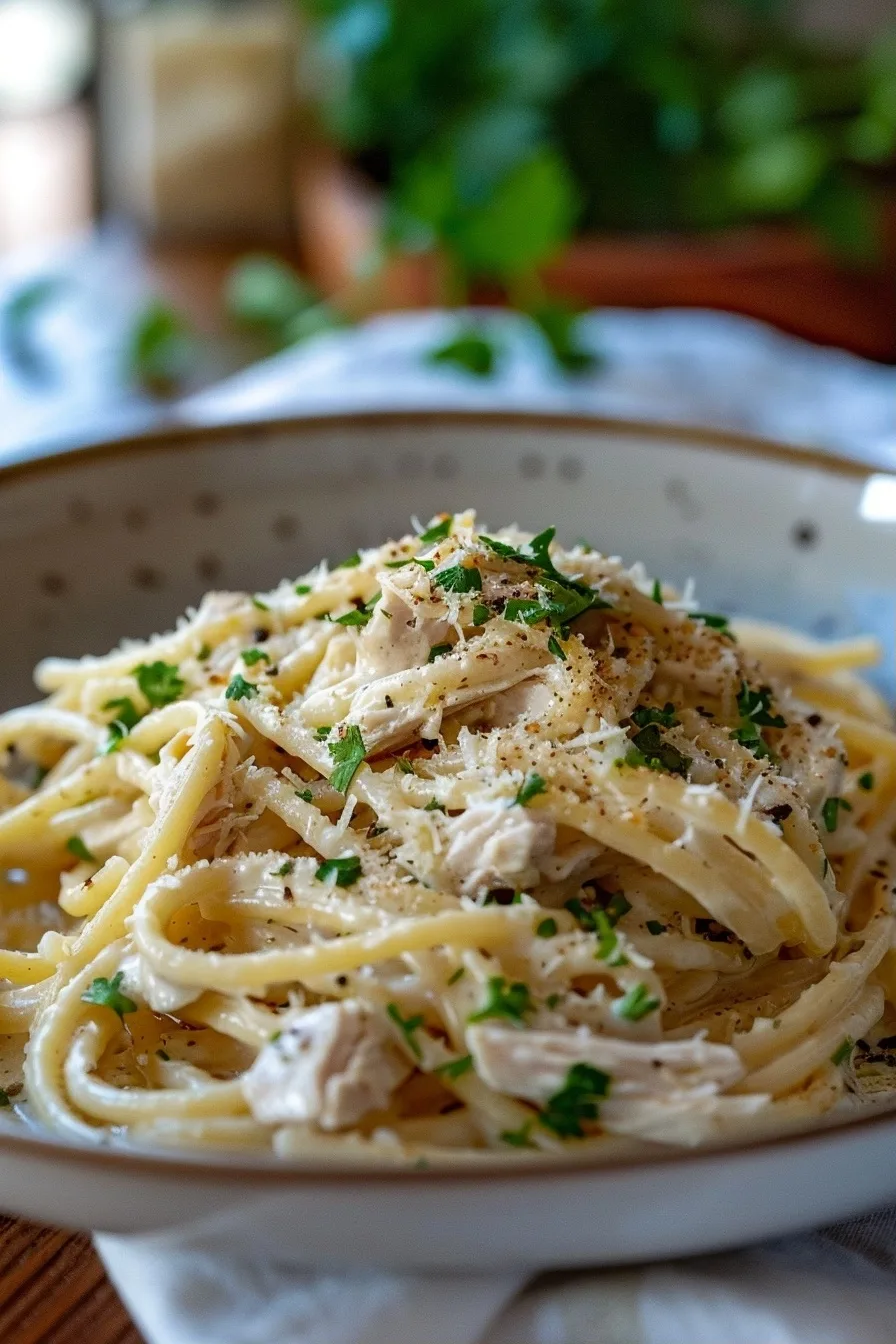
Creamy Garlic Parmesan Shredded Chicken Pasta is a dense, high-protein comfort meal featuring tender poultry bound in a silky, emulsified dairy sauce. This refined dish emphasizes the interplay between lipid-rich heavy cream and sharp, aged hard cheese to provide a velvety mouthfeel. It stands as a reliable, nutritionally balanced dinner option for home cooks seeking efficiency without compromising professional culinary standards.
| Metric | Details |
|---|---|
| Prep Time | 10 minutes |
| Cook Time | 15 minutes |
| Total Time | 25 minutes |
| Servings | 4 servings |
| Difficulty | Easy |
| Cuisine | American-Italian Fusion |
Why This Recipe Works
The science of this dish relies on the effective emulsification of fats and proteins. By utilizing heavy cream as the base, we provide a stable medium for the parmesan cheese to melt without curdling or separating. The starch residual from the pasta water plays a mechanical role here, acting as a binding agent that helps the sauce cling to the noodles rather than pooling at the bottom of the bowl.
I choose to use pre-shredded chicken here to facilitate a rapid, even heat distribution. Because the chicken is already cooked, the goal is solely to bring it to a temperature that matches the pasta and sauce, preventing the proteins from becoming rubbery or dry. This ensures every mouthful remains succulent and uniform in texture.
Temperature control is the most critical variable when working with dairy-based sauces. By keeping the heat at a low to medium-low setting during the final assembly, we prevent the heavy cream from scorching or breaking. This delicate approach preserves the volatile aromatics of the garlic and ensures the parmesan creates a smooth glaze rather than stringy clumps.
Ingredients
| Ingredient | Quantity | Notes |
|---|---|---|
| Shredded Chicken | 2 cups (approx. 300g) | Cooked, skinless breast or thigh |
| Pasta | 8 oz (225g) | Penne or fettuccine works best |
| Heavy Cream | 1/2 cup (120ml) | Full-fat, no substitutes |
| Parmesan Cheese | 1/4 cup (25g) | Freshly grated, finely ground |
| Garlic | 2 cloves | Minced finely |
| Butter | 1 tbsp | Unsalted, for sweating aromatics |
| Broth | 1/4 cup | Low-sodium chicken or vegetable |
Step-by-Step Instructions
Preparation and Pasta Boiling
- Bring a large pot of salted water to a rolling boil over high heat.
- Add the pasta and cook according to the package directions, ensuring you stop 60 seconds before reaching al dente.
- Reserve 1/2 cup of the starchy pasta water before draining the noodles.
Sauce Development
- Heat the butter in a wide-bottomed stainless steel skillet over medium-low heat.
- Add the minced garlic and sauté until fragrant, being careful not to let the garlic brown, as burnt garlic turns bitter.
- Pour in the heavy cream and a small splash of broth, allowing the mixture to simmer until it thickens slightly.
Assembly and Finishing
- Lower the heat and whisk in the parmesan cheese until it dissolves into a homogeneous, velvety sauce.
- Fold in the shredded chicken, allowing it to warm through for approximately three minutes.
- Toss the cooked pasta into the sauce, adding small amounts of the reserved pasta water to adjust the consistency until the liquid coats every strand.
Chef Tips for Perfect Results
- Always grate your own parmesan cheese; pre-grated varieties contain cellulose that prevents smooth melting.
- Use room temperature chicken to ensure it reaches the proper internal temperature without cooling the sauce.
- Keep the sauce at a gentle simmer; high heat causes heavy cream to split into its water and fat phases.
- Season with cracked black pepper at the very end to preserve the sharp, citrusy notes of the spice.
- Finish with a tiny squeeze of fresh lemon juice if the sauce feels too rich, adding a bright acid note to balance the fats.
Common Mistakes to Avoid
One common failure is adding the parmesan while the pan is at a high heat, which turns the cheese into a gummy, stringy mess; always use low heat for dairy infusions. Another error involves using too much pasta water at once, which thins the sauce excessively and dilutes the delicate garlic flavor. Overcooking the pasta is a third failure point, as the noodles absorb the sauce and turn into mush. Fix this by pulling the pasta when it still has a firm bite, allowing the residual heat in the sauce to provide the final stage of cooking.
Variations and Substitutions
| Ingredient | Substitution | Impact on Flavor/Texture |
|---|---|---|
| Heavy Cream | Full Fat Coconut Milk | Adds a subtle sweetness and slightly lighter consistency |
| Parmesan | Pecorino Romano | Pecorino is sharper and saltier; use 20% less salt |
| Chicken | Smoked Turkey Shreds | Provides a deeper, savory flavor profile without pork |
Serving Suggestions and Pairings
This dish pairs exceptionally well with a side of steamed broccolini tossed in olive oil and lemon zest. For a refreshing beverage, serve with a chilled, non-alcoholic pomegranate sparkler, which cuts through the heavy cream components. If serving for a formal dinner, complement the meal with a warm toasted baguette brushed with garlic and finished with a pinch of fresh parsley.
Storage and Reheating
| Method | Duration | Technical Instructions |
|---|---|---|
| Refrigerator | 3 Days | Store in an airtight container; add a tablespoon of milk when reheating |
| Reheating | Slow Heat | Use a skillet on medium-low heat, stirring constantly to prevent sauce separation |
Nutritional Information
Approximate values per serving (Calculated based on 4 servings):
| Nutrient | Amount per Serving |
|---|---|
| Calories | 480 kcal |
| Protein | 28g |
| Fat | 22g |
| Carbohydrates | 42g |
Frequently Asked Questions
Can I use pre-cooked store-bought rotisserie chicken?
Yes, rotisserie chicken is an excellent time-saver for this recipe, provided that it is not heavily seasoned with aggressive flavor profiles like lemon-pepper or BBQ. Simply ensure the meat is shredded finely to allow it to integrate seamlessly into the sauce.
Why did my sauce look grainy?
A grainy sauce texture is usually a result of the parmesan cheese heating too rapidly. The protein structure of the cheese tightens and releases its fat when shocked by high heat, causing it to separate.
Can I freeze this pasta dish?
Cream-based sauces generally do not freeze well because the protein matrix breaks down upon thawing. For the best culinary experience, enjoy this meal fresh or store within the recommended refrigerated window.
How do I know if the chicken is properly heated?
The chicken is ready when it reaches a consistent internal temperature throughout the mixture. Use a food-grade thermometer to ensure the center of the largest shreds hits 165°F (74°C) for maximum food safety.
What is the minimum requirement for the pasta water?
You should reserve at least 1/2 cup of the starchy water regardless of how much you think you need. The starch content is vital for creating that glossy, professional-looking finish that clings to the pasta effectively.
Conclusion
Mastering this Creamy Garlic Parmesan Shredded Chicken Pasta brings comfort and technical precision to your home kitchen. The balance of silky dairy, aromatic garlic, and savory poultry creates an experience that satisfies the palate while remaining approachable for any night of the week. Focus on temperature control and high-quality cheese to ensure a smooth, luxurious texture that defines this classic dish. Embrace the process, keep the heat low, and enjoy the rich, grounding flavors of a perfectly executed meal that turns simple staples into a culinary success.