

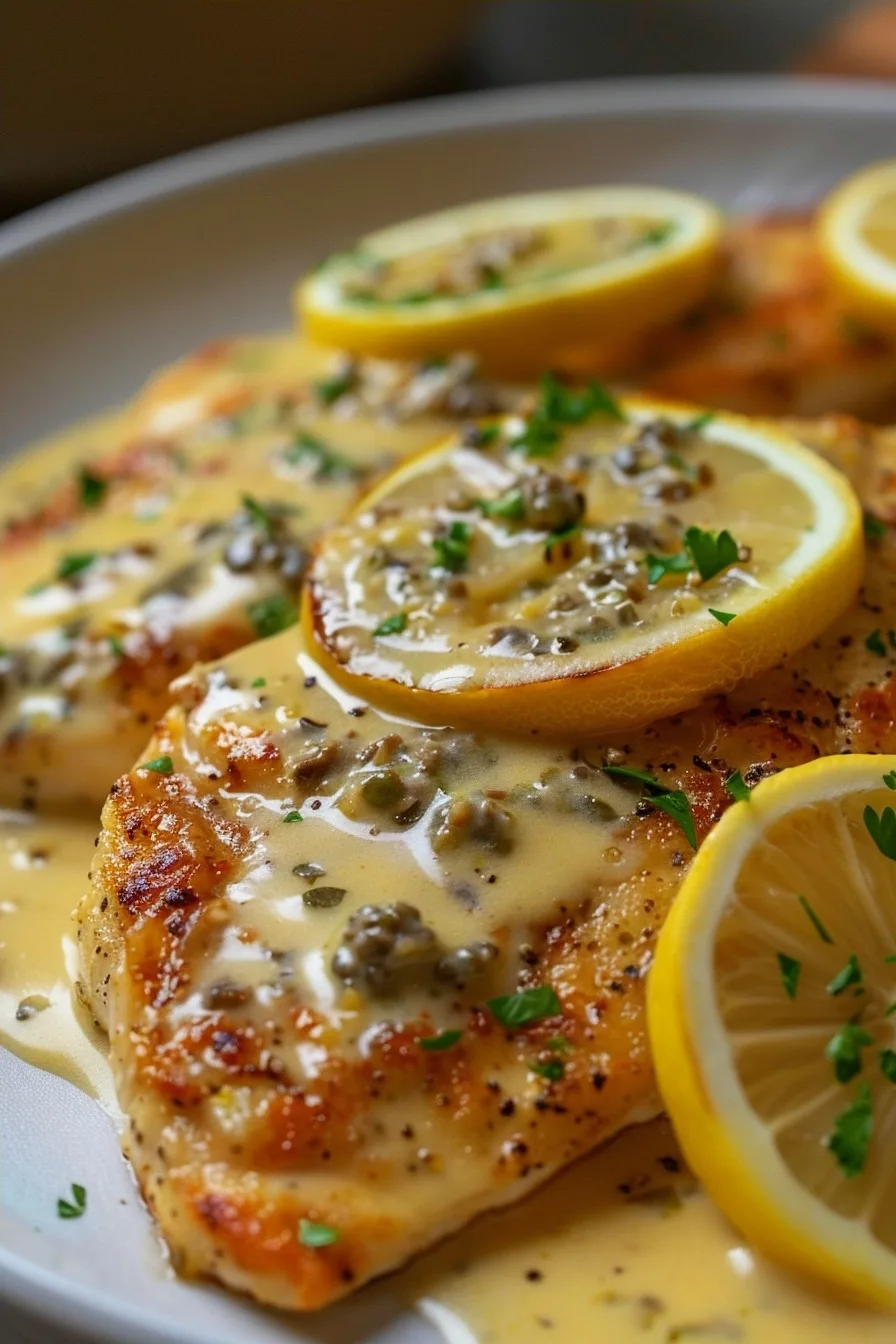
Creamy lemon chicken piccata is a refined, savory pan-seared poultry dish highlighted by a vivid lemon-cream reduction and piquant capers. This preparation relies on precise heat control to ensure the chicken cutlets develop a golden, tender crust without drying out, while the pan sauce brings everything together through careful emulsification. By utilizing fresh citrus and high-quality dairy, we achieve a balance that highlights the natural proteins while providing a luxurious finish.
| Prep Time | Cook Time | Total Time | Servings | Difficulty | Cuisine |
|---|---|---|---|---|---|
| 10 mins | 15 mins | 25 mins | 4 | Easy | Italian-American |
Why This Recipe Works
The culinary success of this creamy lemon chicken piccata lies in the initial searing process. When you dredge chicken breast cutlets in a thin layer of flour, you create a physical barrier that encourages the Maillard reaction—a chemical process where amino acids and reducing sugars brown to create complex flavors. This crust also serves a secondary purpose: it adds subtle texture to the final dish and helps thicken the subsequent pan sauce.
My approach to the sauce eliminates the need for typical alcohol-based deglazing agents. Instead, I utilize the natural acidity of fresh lemon juice combined with the richness of heavy cream. This fusion creates a stable emulsion that clings perfectly to the chicken. The scientific reliance on high-fat dairy stabilizes the citric acid, preventing the sauce from curdling while adding a velvety mouthfeel that standard water-based reductions lack.
Temperature management during the reduction stage is critical for achieving a glossy finish. By keeping the heat at a medium simmer after adding the butter and cream, we allow the butter’s milk solids to integrate smoothly into the lemon reduction. This method produces a cohesive, professional-grade sauce that remains stable on the plate, ensuring that every bite carries the bright notes of lemon and the salty punch of the capers.
Ingredients
| Ingredient | Quantity | Notes |
|---|---|---|
| Chicken Breast Cutlets | 1 lb (450g) | Thinly sliced for even cooking |
| All-Purpose Flour | 1/2 cup | For dredging |
| Unsalted Butter | 2 tbsp | For searing and sauce |
| Lemon Juice | 1/4 cup | Freshly squeezed |
| Heavy Cream | 1/4 cup | High fat content preferred |
| Capers | 1 tbsp | Drained and rinsed |
| Olive Oil | 2 tbsp | For frying |
| Salt/Black Pepper | To taste | Use fine sea salt |
Step-by-Step Instructions
Preparation Phase
- Pat the chicken cutlets dry with paper towels to ensure the flour adheres properly.
- Season the flour lightly with salt and pepper in a shallow dish.
- Dredge each piece of chicken in the flour, shaking off any excess to prevent a gummy texture.
Searing Phase
- Heat olive oil and one tablespoon of butter in a large skillet over medium-high heat.
- Place the chicken in the pan, ensuring not to overcrowd, and cook for 3-4 minutes per side until golden brown.
- Remove the chicken from the pan and set aside on a warm plate.
Sauce Reduction Phase
- Lower the heat to medium and pour in the fresh lemon juice to deglaze the skillet, scraping up the browned bits.
- Whisk in the heavy cream and capers, allowing the mixture to simmer until it begins to thicken slightly.
- Finish the sauce by whisking in the remaining tablespoon of butter until glossy.
- Return the chicken to the pan for one minute to coat thoroughly before serving.
Chef Tips for Perfect Results
- Always use thin cutlets to minimize the time between exterior browning and interior doneness.
- Avoid using bottled lemon juice, as the preservatives leave a metallic aftertaste that ruins the cream emulsion.
- If the sauce becomes too thick, add a tablespoon of chicken broth or warm water to achieve the desired consistency.
- Ensure the pan is genuinely hot before adding the chicken, or the crust will absorb oil rather than searing.
- Using a wide non-stick or stainless steel skillet maximizes surface area for better browning.
Common Mistakes to Avoid
One frequent error is failing to dry the chicken properly; moisture on the surface creates steam, which prevents the flour from forming a crisp, golden barrier. Another mistake is adding the cream too quickly to high heat, which can cause the milk solids to separate; always reduce the heat before adding dairy. Finally, overcrowding the pan leads to a drop in temperature, resulting in pale, soggy chicken rather than a properly browned finished product.
Variations and Substitutions
| Ingredient | Substitution | Impact |
|---|---|---|
| Heavy Cream | Full-fat coconut milk | Adds a subtle tropical note |
| Chicken Breast | Turkey cutlets | Lighter, denser protein structure |
| Capers | Chopped green olives | Brinier, more intense salt profile |
Serving Suggestions and Pairings
This dish performs best alongside roasted asparagus, garlic-infused mashed potatoes, or a bed of al dente linguine. For an upscale touch, serve with a side of steamed broccolini drizzled with extra virgin olive oil. A chilled glass of sparkling cider or a crisp sparkling water infused with fresh mint makes an excellent non-alcoholic pairing to cut through the richness of the creamy sauce.
Storage and Reheating
| Method | Duration | Reheating Instructions |
|---|---|---|
| Refrigerator | 3 Days | Warm in a skillet over low heat with a splash of broth |
| Freezer | Not advised | Cream-based sauces tend to break when thawed |
Nutritional Information (Approximate values)
| Nutrient | Amount per Serving |
|---|---|
| Calories | 340 kcal |
| Protein | 28g |
| Fat | 18g |
| Carbohydrates | 12g |
Frequently Asked Questions
Can I substitute the heavy cream?
While heavy cream provides the best texture, you can use a combination of milk and a teaspoon of cornstarch to thicken the sauce if necessary. This will result in a slightly lighter flavor profile but will still maintain the necessary consistency for the piccata style.
How do I know the chicken is done?
The internal temperature of the chicken must reach 165°F (74°C) as recommended by the USDA to ensure safety. You should use a digital thermometer to confirm this, as color is not always a reliable indicator of safe doneness.
Why is my sauce separating?
A separating sauce typically indicates that it was boiled too vigorously after adding the cream and butter. Always keep the heat at a gentle simmer to ensure the fats remain emulsified.
Can I prep this dish ahead of time?
You can dredge the chicken in flour shortly before cooking, but frying and sauce reduction should be done immediately before serving. This ensures the chicken maintains its crispness and the cream sauce remains smooth.
What should I do if the sauce is too thin?
Continue to simmer the sauce over low heat, allowing more water to evaporate from the lemon juice and cream. If it still does not reach the desired thickness, whisk in a very small amount of cornstarch slurry.
Conclusion
Adapting this classic technique to a creamy finish provides a satisfying meal that fits perfectly into any weeknight schedule. By focusing on the structural importance of the flour dredge and the temperature management of your dairy, you create a dish that is both technically sound and comforting. The final result is a vibrant, golden-crusted protein enveloped in a silky, lemon-brightened reduction. Enjoy the sharp, salty punch of the capers as they round out every bite with a sophisticated, professional finish.
Creamy Lemon Chicken Piccata
This refined, professional-grade chicken piccata features tender, pan-seared cutlets crusted in a light flour coating and smothered in a luxurious, alcohol-free lemon-cream reduction. By substituting traditional deglazing agents with fresh citrus acidity and high-fat dairy, we achieve a stable, silky emulsion that perfectly complements the salty punch of capers. This elegant Italian-American dish highlights the natural flavors of the chicken while providing a rich, velvety mouthfeel, making it a perfect choice for those seeking a sophisticated dinner without the use of wine or spirits.
- Prep Time: 10
- Cook Time: 15
- Total Time: 25
- Yield: 4 servings
- Category: Dinner
- Method: Pan-Searing
- Cuisine: Italian-American
- Diet: Halal
Ingredients
1 lb (450g) Chicken Breast Cutlets, thinly sliced
1/2 cup All-Purpose Flour
2 tbsp Unsalted Butter
1/4 cup Fresh Lemon Juice
1/4 cup Heavy Cream
1 tbsp Capers, drained and rinsed
2 tbsp Olive Oil
Salt and Black Pepper to taste
Instructions
Pat the chicken cutlets dry with paper towels and season both sides with salt and pepper.
Dredge each cutlet in the flour, shaking off the excess to ensure a thin, even coating.
Heat olive oil and 1 tablespoon of butter in a large skillet over medium-high heat.
Sear the chicken in a single layer until golden brown on both sides and cooked through; remove chicken from the pan and set aside.
Reduce heat to medium, add the lemon juice to the pan to deglaze, scraping up any browned bits.
Stir in the heavy cream and the remaining tablespoon of butter, whisking until the sauce emulsifies and thickens slightly.
Add the capers, then return the chicken to the pan to coat thoroughly with the creamy sauce.
Serve immediately while warm and glossy.
Notes
Ensure chicken is sliced to a uniform thickness for even cooking. Do not let the sauce boil vigorously once the cream is added to prevent breaking the emulsion. For a lighter version, half-and-half may be substituted for heavy cream, though it may be less stable.