

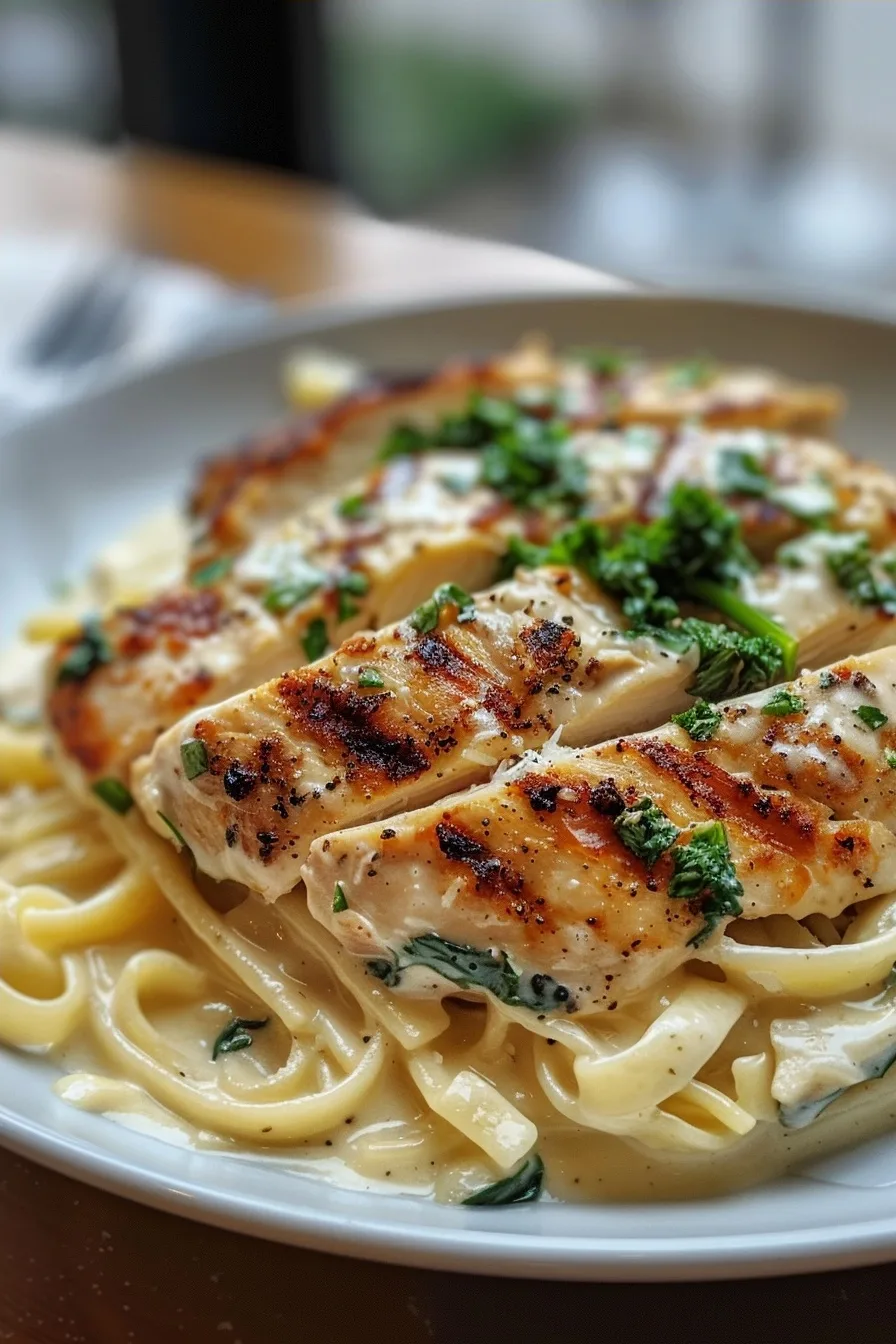
High protein grilled chicken Alfredo provides a nutrient-dense, muscle-building dinner that replaces heavy cream with a sophisticated blend of Greek yogurt and aged parmesan. This dish utilizes lean poultry and high-fiber protein pasta to ensure satiety while maintaining an impressive macronutrient profile for active adults. By relying on the structural properties of curd-strained yogurt and high-quality cheese, this sauce recreates the classic velvety texture found in traditional Italian-style cuisine without excessive saturated fats.
| Category | Details |
|---|---|
| Prep Time | 10 minutes |
| Cook Time | 15 minutes |
| Total Time | 25 minutes |
| Servings | 4 servings |
| Difficulty | Easy |
| Cuisine | Modern American |
Why This Recipe Works
The culinary logic behind this Alfredo involves the clever manipulation of heat-stable proteins. Common Alfredo sauces rely on heavy cream for emulsion, but heating yogurt requires careful temperature control to prevent curdling. By integrating starchy pasta water into the Greek yogurt base, you create a stable, creamy environment that mimics the viscosity of traditional heavy cream while significantly increasing the protein density per serving.
My experimental approach focuses on the Maillard reaction achieved during the grilling phase of the chicken. When protein surfaces reach temperatures above 300 degrees Fahrenheit, complex flavor compounds form, providing an essential savory depth that prevents the yogurt-based sauce from tasting one-dimensional. This char provides a necessary contrast to the acidity of the yogurt, creating a balanced flavor profile that lingers on the palate.
Finally, the selection of protein-enriched pasta utilizes legumes or whole-wheat bases to ensure a lower glycemic index compared to traditional semolina noodles. These pasta varieties contain more complex structures that resist overcooking, ensuring each strand provides enough bite to stand up to the thick, clinging sauce. Integrating these elements creates a dish built for performance, comfort, and professional-grade culinary quality.
Ingredients
| Ingredient | Quantity | Notes |
|---|---|---|
| Grilled Chicken Breast | 1 lb (450g) | Boneless, skinless, sliced |
| Protein Pasta | 8 oz (225g) | Chickpea or lentil-based suggested |
| Greek Yogurt | 1/2 cup (120g) | Plain, non-fat or 2% |
| Parmesan Cheese | 1/4 cup (25g) | Freshly grated, high quality |
| Garlic | 2 cloves | Minced, fresh |
| Pasta Water | 1/4 cup (60ml) | Reserved from boiling |
| Black Pepper | To taste | Freshly cracked |
Step-by-Step Instructions
Prep and Grilling
- Season the chicken breasts with olive oil, salt, and smoked paprika for depth.
- Preheat the grill or cast-iron skillet to medium-high heat.
- Sear the chicken for about 6 minutes per side until the internal temperature reaches 165 degrees Fahrenheit.
- Remove the chicken from the heat and allow it to rest for 5 minutes before slicing into strips.
Pasta Execution
- Boil a large pot of salted water.
- Add the protein pasta and cook according to the package instructions until al dente.
- Reserve 1/4 cup of the starchy pasta water before draining the noodles.
Sauce Reduction and Plating
- Combine the Greek yogurt, finely grated parmesan, minced garlic, and reserved pasta water in a small bowl.
- Whisk until the mixture forms a smooth, homogenous sauce.
- Add the cooked pasta back to the pot over very low heat.
- Toss the pasta with the yogurt sauce for 60 seconds until heated through, then fold in the sliced grilled chicken.
Chef Tips for Perfect Results
- Always keep the heat level extremely low when adding the yogurt to avoid the protein denaturing and creating grainy clusters.
- Temper the yogurt by whisking in the hot pasta water slowly before adding it to the noodles.
- Use a microplane to grate the parmesan, which allows the cheese to emulsify faster into the yogurt base.
- Resting the chicken is mandatory to keep the muscle fibers relaxed and the juices inside the meat.
- Freshly cracked black pepper provides an essential aromatic component that balances the richness of the parmesan.
Common Mistakes to Avoid
Common failures include boiling the sauce, which ruins the texture. When the yogurt temperature exceeds 160 degrees Fahrenheit, the whey and solids separate, leaving a watery mess where you want a thick sauce. To prevent this, add the sauce off the heat.
Overcooking the protein pasta is another risk, as high-protein variants have different structural integrity than semolina. Check for doneness two minutes before the package suggests to maintain a desired firm texture. Using pre-grated parmesan introduces anti-caking agents that prevent a smooth melt; always grate from a block to ensure consistent biochemical results.
Variations and Substitutions
| Ingredient | Substitution | Impact on Flavor/Texture |
|---|---|---|
| Greek Yogurt | Cottage Cheese (blended) | Increased protein, slightly saltier |
| Garlic | Roasted Garlic Paste | Milder, caramelized sweetness |
| Grilled Chicken | Grilled Turkey Breast | Leaner, lighter flavor profile |
Serving Suggestions and Pairings
Pair this dish with a side of steamed broccoli or roasted asparagus to add color and essential fiber. A sparkling water infused with fresh lemon and basil provides a palate-cleansing finish that refreshes the mouth between bites of the rich sauce. For a more formal presentation, serve in wide-rimmed bowls to highlight the structural appeal of the grilled chicken strips resting atop the coated pasta.
Storage and Reheating
| Method | Duration | Technical Instructions |
|---|---|---|
| Refrigerator | 3 days | Store in an airtight container |
| Reheating | Stovetop | Add 1 tablespoon of water and heat on low, stirring constantly |
Nutritional Information
Approximate values per serving:
| Nutrient | Amount per Serving |
|---|---|
| Calories | 410 kcal |
| Protein | 38g |
| Fat | 12g |
| Carbohydrates | 35g |
| Fiber | 6g |
Frequently Asked Questions
Can I freeze the Alfredo sauce for later?
Freezing this sauce is not recommended because the Greek yogurt emulsion will break upon thawing and heating, resulting in a grainy texture. Prepare the sauce fresh for every batch to maintain the intended mouthfeel.
How do I know the chicken is safe to eat?
The chicken is safe when an instant-read thermometer registers 165 degrees Fahrenheit in the thickest part of the breast. Visual cues like white juices also confirm the protein has reached the appropriate stage of denaturation.
What if my sauce is too thick?
If the sauce becomes too thick, simply add one tablespoon of warm water at a time until you reach your desired consistency. The starches in the pasta water usually provide the perfect binding power, but additional moisture helps adjust for evaporation.
Can I swap the protein pasta for regular pasta?
You can substitute regular semolina pasta, though the macronutrient profile will change to feature higher carbohydrates and lower protein. Cooking times may vary, so keep a close watch on the pasta during the boiling stage.
Is there a way to add more depth to the flavor?
Adding a pinch of nutmeg or a splash of lemon zest provides bright, aromatic notes that enhance the creaminess of the parmesan. Use these additions sparingly to maintain the balance of the dish.
By mastering the temperature and emulsion techniques presented, you can create a high-quality meal that satisfies cravings for Italian comfort while adhering to strict health goals. The final result combines a punchy, savory garlic scent with the firm, charred edge of grilled poultry, delivering a dining experience that feels professionally crafted yet accessible enough for a weeknight dinner routine. Learn more about healthy cooking through the USDA Dietary Guidelines or by checking resources at Penn State Food Science.
High Protein Grilled Chicken Alfredo
This nutrient-dense iteration of a classic Alfredo replaces heavy cream with a creamy blend of Greek yogurt and aged Parmesan. Featuring perfectly grilled chicken breast and protein-packed legume pasta, this dish provides a muscle-building dinner without compromising on the velvety texture of original Italian-style sauces. It is a performance-focused meal that balances deep savory flavors from the Maillard reaction on the chicken with a bright, protein-rich sauce, ensuring you stay satisfied and energized.
- Prep Time: 10
- Cook Time: 15
- Total Time: 25
- Yield: 4 servings
- Category: Dinner
- Method: Grilling and Boiling
- Cuisine: Modern American
- Diet: High-Protein
Ingredients
1 lb (450g) boneless skinless chicken breast, sliced
8 oz (225g) chickpea or lentil-based protein pasta
1/2 cup (120g) plain Greek yogurt
1/4 cup (25g) freshly grated Parmesan cheese
2 cloves garlic, minced
1/4 cup reserved pasta water
1/4 tsp black pepper
1/2 tsp sea salt
1 tbsp olive oil (for grilling)
Instructions
Bring a large pot of water to a boil and cook the protein pasta according to package directions, reserving 1/4 cup of the pasta water before draining.
While the water heats, brush the chicken breast with olive oil, season with salt and pepper, and grill over medium-high heat until cooked through with a nice char.
In a small bowl, whisk together the Greek yogurt, grated Parmesan, and minced garlic.
Add the reserved hot pasta water to the yogurt mixture slowly, whisking constantly to create a smooth sauce.
In the same pot used for the pasta, combine the cooked noodles and the sauce over very low heat for 30 seconds to warm through—do not boil.
Toss in the sliced grilled chicken and serve immediately.
Notes
Ensure the heat is very low when adding the sauce to the pasta to prevent the Greek yogurt from curdling. Using freshly grated Parmesan provides a much smoother melt compared to pre-shredded varieties.