

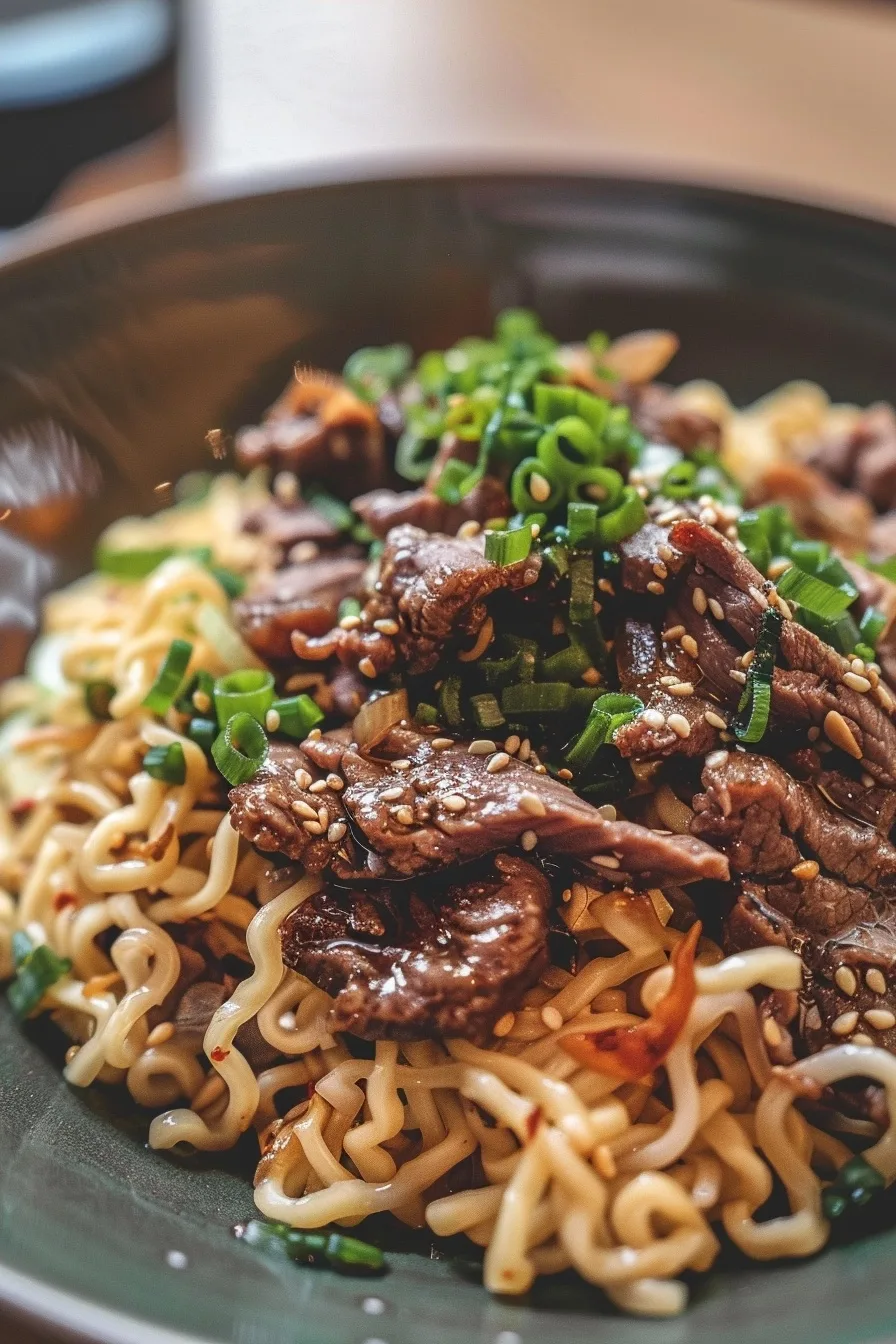
20-minute Ramen Noodles with Beef provides a high-protein, satisfying meal solution that bridges the gap between quick instant convenience and savory, scratch-made flavor. By leveraging the Maillard reaction in high-temperature searing, home cooks can transform affordable pantry staples into an incredibly aromatic dinner bowl. This method focuses on efficiency and flavor extraction to ensure your weeknight cooking happens with precision rather than stress.
Recipe Overview
| Metric | Details |
|---|---|
| Prep Time | 5 Minutes |
| Cook Time | 15 Minutes |
| Total Time | 20 Minutes |
| Servings | 2 servings |
| Difficulty | Beginner |
| Cuisine | Fusion |
Why This Recipe Works
I designed this recipe using a dry-searing technique that prioritizes texture and browning. Ground beef contains high amounts of amino acids and reducing sugars which, when heated rapidly in a conductive pan, produce deep roasted aromas through the Maillard reaction. By avoiding overcrowding in the skillet, we ensure the meat browns rather than steams, providing a crisp texture that pairs perfectly with the chew of the ramen.
The science of this sauce relies on the emulsification of sesame oil and soy sauce against the starch present in the noodle water. When we toss the hot, freshly drained noodles into the beef and cabbage mixture, the residual starch on the noodle surface acts as a thickening agent. This binds the savory compounds to the strands, ensuring each bite remains coated in flavor.
Cabbage acts as a vital structural partner in this dish. Its fibrous nature provides the necessary crunch to contrast the soft wheat noodles and the savory protein. Because it captures liquid quickly, the cabbage absorbs the seasoned beef juices, turning a simple vegetable into a concentrated flavor vessel that balances the overall salt-to-fat ratio.
Ingredients
| Ingredient | Quantity | Notes |
|---|---|---|
| Ground Beef | 1 lb (450g) | Lean 85/15 blend recommended |
| Ramen Noodles | 2 packs | Discard seasoning packets |
| Shredded Cabbage | 1 cup | Green or Napa variety |
| Soy Sauce | 1 tbsp | Low sodium preferred |
| Sesame Oil | 1 tsp | Adds nutty top notes |
| Water | For boiling | Reserved cooking starch water |
Step-by-Step Instructions
Prep and Boil
- Fill a large saucepan with water and bring it to a rolling boil over high heat.
- Add the instant ramen noodle cakes to the water, pushing them down gently until submerged.
- Cook the noodles for precisely 2 minutes, ensuring they remain slightly under-cooked, as they will finish in the pan.
- Reserve 1/4 cup of the starchy cooking water before draining the noodles completely in a colander.
Sear the Protein
- Preheat a heavy-bottomed skillet over medium-high heat until the surface is hot to the touch.
- Add the ground beef to the pan and break it apart into small crumbles using a wooden spatula.
- Sear the beef undisturbed for 3 minutes to encourage deep browning, then flip sections to brown the other side.
- Add the cup of shredded cabbage during the final minute of searing to allow it to wilt while retaining a slight structural bite.
Combine and Finish
- Add the par-cooked noodles directly into the pan with the beef and cabbage mix.
- Pour the soy sauce and sesame oil over the noodles, using your spatula to toss everything together vigorously.
- Add the reserved hot starch water incrementally to help create a glossy, unified sauce that clings to the ingredients.
- Remove from heat immediately to prevent overcooking the noodles into a gummy texture and serve in pre-warmed bowls.
Chef Tips for Perfect Results
- Always use an infrared thermometer or a heavy skillet to ensure the pan reaches at least 350°F (175°C) before adding the beef to trigger proper browning.
- Only use the noodles from the packet; check USDA food safety guidelines for handling ground meat at high heat.
- Keep your cabbage shred size uniform to ensure even wilting across all pieces in the hot pan.
- Add the sesame oil at the very end of the cooking process to preserve its delicate, volatile aromatic compounds which dissipate if overheated.
- Use a cast-iron skillet if available, as the heat retention provides better surface-area contact than standard non-stick coatings.
Common Mistakes to Avoid
- Over-boiling the noodles creates a mushy texture; always aim for firm-to-the-bite as they continue cooking in the heat of the beef mixture.
- Crowding the pan causes the meat to release too much moisture, leading to gray, boiled beef instead of the deep mahogany brown we desire.
- Forgetting to reserve the starchy pasta water limits your ability to create a cohesive bond between the noodles and the seasonings.
- Using high-sodium soy sauce without adjusting the salt levels can lead to a dish that masks the complex, nutty qualities of the sesame oil.
Variations and Substitutions
| Ingredient | Substitution | Impact |
|---|---|---|
| Beef | Ground Turkey | Lower fat content, lighter flavor profile |
| Cabbage | Baby Spinach | Adds higher iron, faster wilt time |
| Soy Sauce | Coconut Aminos | Provides sweetness with less salt |
Serving Suggestions and Pairings
Serve this dish in deep ceramic bowls to retain heat, topped with thinly sliced scallions or toasted sesame seeds for aesthetics and texture. For a complete dining experience, pair this with a crisp, non-alcoholic ginger-lime sparkling soda to cut through the richness of the beef. If preparing for a dinner party, consider setting up a condiment station with fresh cilantro or lime wedges on the side for guests to customize their acid levels.
Storage and Reheating
| Method | Duration | Technical Instructions |
|---|---|---|
| Refrigerator | 2-3 Days | Store in an airtight glass container to prevent flavor cross-contamination. |
| Reheating | N/A | Add one tablespoon of water to the pan and reheat over medium heat for 2 minutes. |
Nutritional Information
| Nutrient | Amount per Serving (Approximate) |
|---|---|
| Calories | 480 |
| Protein | 28g |
| Fat | 18g |
| Carbohydrates | 42g |
Frequently Asked Questions
Can I use gluten-free noodles?
Yes, rice noodles or buckwheat soba are excellent substitutes that maintain structural integrity when tossed with high-heat beef. Ensure you adjust the boiling time on the package, as gluten-free grains often have different starch compositions.
How do I know when the beef is properly browned?
The beef is properly browned when the exterior displays a deep mahogany color and the fat rendered in the pan turns clear rather than cloudy. If liquid begins pooling around the edges of the meat, your pan temperature has likely dropped too low.
Why is the texture of my noodles sometimes gummy?
Gummy noodles result from over-boiling or adding too much water during the final step. Always remove the noodles when they still have a slight resistance in the center to maintain the desired toothsome quality.
Can this dish be frozen for later?
Freezing this dish is not recommended because the texture of modern instant noodles degrades rapidly after a freeze-thaw cycle. I suggest consuming the dish fresh to preserve the delicate balance between the crunchy cabbage and tender beef.
How can I make the flavor more intense?
Add a tablespoon of store-bought chili crisp or freshly grated ginger to the beef during the final 30 seconds of searing. Focus on aromatic dry spices like Sichuan peppercorn powder to add a vibrating, numbing sensation that plays well with the savory beef profile.
Mastering this simple 20-minute Ramen Noodles with Beef demonstrates that incredible flavor does not require complex equipment or expensive ingredients. By balancing the searing of your protein with the intentional use of starch water, you achieve a restaurant-quality finish right in your own kitchen. Keep the heat high, the timing precise, and enjoy the contrast of the savory, tender beef against the crisp ribbons of cabbage and perfectly chewy noodles.
20-Minute Ramen Noodles with Beef
This high-protein, satisfying meal bridges the gap between quick convenience and scratch-made flavor. By utilizing a high-temperature dry-searing technique, the ground beef develops a deep, roasted flavor through the Maillard reaction. Tossed with tender ramen noodles, crisp cabbage, and a simple soy-sesame emulsion, this dish uses residual noodle starch to create a silky, savory sauce that clings to every bite. Perfect for a busy weeknight, this recipe delivers restaurant-quality aromas and textures in just 20 minutes.
- Prep Time: 5
- Cook Time: 15
- Total Time: 20
- Yield: 2 servings
- Category: Dinner
- Method: Stir-frying
- Cuisine: Fusion
- Diet: Halal
Ingredients
1 lb (450g) lean ground beef (85/15 blend)
2 packs instant ramen noodles (discard seasoning packets)
1 cup shredded green or Napa cabbage
1 tbsp low-sodium soy sauce
1 tsp sesame oil
Water for boiling
Instructions
Bring a large saucepan of water to a rolling boil over high heat.
Add ramen noodle cakes and cook for exactly 2 minutes until slightly under-cooked.
Drain noodles, making sure to reserve a small amount of the starchy cooking water.
Heat a large skillet over high heat and add the ground beef.
Sear the beef without moving it initially to ensure a deep crust, then break it up and cook until browned.
Add the shredded cabbage to the skillet and sauté until just wilted.
Add the cooked noodles to the skillet with the beef and cabbage mixture.
Pour in the soy sauce and sesame oil, adding a splash of the reserved starchy water to emulsify.
Toss everything together over high heat until the noodles are coated and fully cooked through.
Notes
Ensure the heat remains high during the beef searing process to achieve the best Maillard reaction. Do not overcrowd the pan. If the sauce becomes too dry, add an extra tablespoon of the reserved starchy water to loosen it. For extra flavor, you can garnish with green onions or sesame seeds if desired.