

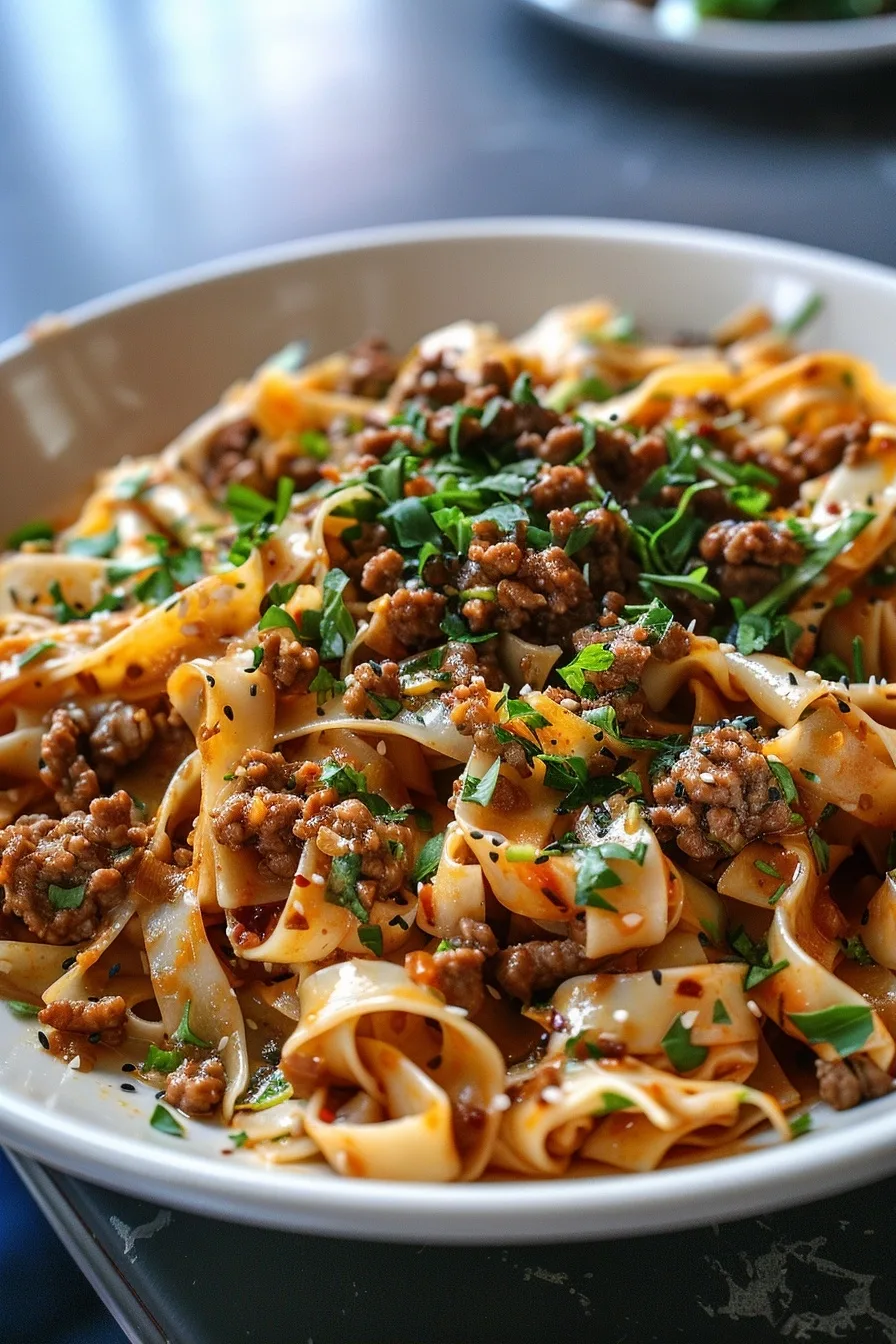
This Easy Mongolian Ground Beef Noodles recipe delivers a rich, savory, and deeply satisfying meal in under 30 minutes. Featuring tender ground beef, perfectly cooked noodles, and a classic sweet-and-salty sauce, it offers weeknight convenience without sacrificing authentic flavor. This dish is a guaranteed crowd-pleaser.
Recipe Overview
| Prep Time | 10 minutes |
|---|---|
| Cook Time | 15 minutes |
| Total Time | 25 minutes |
| Servings | 4 |
| Difficulty | Easy |
| Cuisine | American-Asian Fusion |
Why This Recipe Works
I designed this recipe with speed and flavor integration as top priorities. The Maillard reaction is crucial here; browning the ground beef properly at a medium-high heat creates those desirable complex, roasted notes. Simultaneously, cooking the garlic and ginger allows their volatile aromatic compounds to bloom without burning, forming the flavor base. This foundational step is non-negotiable for depth.
The sauce is deliberately simple, relying on the perfect ratio of soy sauce for umami and salt, balanced by brown sugar for sweetness and body. This dynamic duo coats the beef and noodles beautifully. When tossed together, the residual heat from the beef and the noodles helps the sauce thicken slightly, creating a glossy, clingy coating that marries the components. This synergy ensures every bite is equally flavorful.
Noodle selection also plays a key role. While any pasta works in a pinch, selecting a noodle with some chew and surface area, like lo mein or spaghetti, allows it to absorb the sauce and integrate seamlessly with the ground beef. Avoiding overcooking the noodles is essential; they should retain a slight al dente bite to prevent them from becoming mushy when tossed with the hot ingredients. This structural integrity ensures a pleasing mouthfeel.
Ingredients
| Ingredient | Quantity | Notes |
|---|---|---|
| Ground Beef | 1 lb (454g) | 80/20 or 85/15 lean-to-fat ratio recommended for flavor and moisture. |
| Noodles | 8 oz (227g) | Lo mein, ramen, spaghetti, or linguine work well. Cooked according to package directions. |
| Soy Sauce | 1/4 cup (60ml) | Low-sodium is preferred if you want more control over saltiness, but regular works. |
| Brown Sugar | 2 tbsp (25g) | Light or dark brown sugar. Darker sugars add a molasses note. |
| Fresh Ginger | 1 tsp, minced | Or 1/2 tsp ground ginger. Fresh provides a brighter, sharper flavor. |
| Garlic | 1 tsp, minced | Or 1/2 tsp garlic powder. Fresh garlic offers a more pungent aroma. |
| Vegetable Oil | 1 tbsp (15ml) | For sautéing. Canola or other neutral oil substitute. |
| Sesame Oil (Optional) | 1 tsp | For finishing aroma and flavor. |
| Green Onions (Optional) | 2-3, sliced | For garnish and fresh onion bite. |
Step-by-Step Instructions
Prep Work
-
Boil water for noodles and cook them according to package directions until al dente. Drain the noodles and set aside. Rinse briefly with cool water to prevent sticking if not tossing immediately.
-
Mince the fresh ginger and garlic. If using green onions for garnish, slice them thinly.
Cooking the Beef and Sauce
-
Heat the vegetable oil in a large skillet or wok over medium-high heat until shimmering.
-
Add the ground beef to the hot skillet. Break it apart with a spoon and cook, stirring occasionally, until it is thoroughly browned and no pink remains. Drain off any excess fat, leaving about a tablespoon in the pan for flavor.
-
Add the minced ginger and garlic to the browned beef. Sauté for about 30-60 seconds until fragrant, stirring constantly to prevent burning.
-
Pour in the soy sauce and sprinkle the brown sugar over the beef mixture. Stir well to combine, ensuring the brown sugar dissolves.
-
Continue to cook for another 1-2 minutes, stirring, allowing the sauce to bubble and thicken slightly, coating the beef.
Combining and Finishing
-
Add the cooked and drained noodles directly to the skillet with the beef and sauce.
-
Toss everything together thoroughly using tongs or two spatulas, ensuring the noodles are evenly coated with the savory sauce and mixed with the ground beef.
-
Cook for an additional 1-2 minutes, tossing, to allow the noodles to heat through and absorb more of the sauce.
-
If using, stir in the optional sesame oil for an added layer of nutty aroma and flavor.
-
Serve immediately. Garnish with sliced green onions, if desired.
Chef Tips for Perfect Results
-
Pat the Beef Dry: Before browning, ensure ground beef is not overly wet. Excess moisture steams the meat rather than searing it, hindering the Maillard reaction and resulting in a duller flavor.
-
Achieve Proper Sear: Use a skillet that is adequately hot before adding the beef. A medium-high heat is key to developing caramelized brown bits on the meat, which add immense depth of flavor to the sauce.
-
Don’t Overcrowd the Pan: If your skillet isn’t large enough for 1 lb of beef, brown it in two batches. Overcrowding lowers the pan temperature, leading to steaming and preventing proper browning.
-
Taste and Adjust Sauce: Before adding the noodles, taste the sauce. If it’s too salty, add a touch more sugar or a splash of water. If not savory enough, a tiny bit more soy sauce can be added.
-
Noodle Texture is Key: Cook noodles to one minute less than package directions (al dente). They will finish cooking and absorb sauce in the skillet, preventing them from becoming mushy.
Common Mistakes to Avoid
-
Burning Aromatics: Sautéing minced garlic and ginger on high heat for too long will scorch them, imparting a bitter, acrid taste to the entire dish. Cook them only until fragrant, about 30-60 seconds, after the beef is browned.
-
Watery Sauce: Not allowing the sauce to thicken sufficiently after adding soy sauce and sugar can result in a thin, diluted coating. Simmering for 1-2 minutes after combining the sauce ingredients concentrates the flavors and develops viscosity.
-
Mushy Noodles: Overcooking noodles before adding them to the skillet is a common pitfall. They continue to cook and absorb moisture from the sauce, leading to a less desirable texture.
-
Insufficient Browning: Rushing the meat-browning process or using too low heat prevents the development of deep, savory flavors from the Maillard reaction. Patience and adequate heat are essential for building flavor.
Variations and Substitutions
| Ingredient | Substitution | Impact on Flavor/Texture |
|---|---|---|
| Ground Beef | Ground turkey, ground chicken, or crumbled firm tofu | Turkey/chicken will be leaner and require careful cooking to avoid dryness. Tofu will be vegetarian and absorb sauce flavor, requiring a firmer texture. |
| Soy Sauce | Tamari (gluten-free), coconut aminos (soy-free, lower sodium) | Tamari offers a similar salty, umami profile. Coconut aminos provide a slightly sweeter, less intense soy flavor. |
| Brown Sugar | Honey, maple syrup, or agave nectar | These sweeteners will provide sweetness but may alter the caramelization slightly. Honey and maple syrup add subtle floral or woody notes. |
| Fresh Ginger/Garlic | Ground ginger (1/2 tsp per tsp fresh), garlic powder (1/2 tsp per tsp fresh) | Ground spices offer less sharp, intense flavor but are convenient. They disperse more easily but might not provide the same fresh aromatic burst. |
| Noodles | Zucchini noodles, spaghetti squash | Vegetable noodles will be lighter and absorb sauce differently. They offer a lower-carb option but cook much faster and can become watery if overcooked. Adjust cooking time accordingly. |
Serving Suggestions and Pairings
This dish is wonderfully self-contained, but incredibly satisfying when paired with simple, fresh accompaniments. Consider serving it alongside a crisp, refreshing Asian-inspired cucumber salad, dressed with rice vinegar and a touch of sesame oil. Steamed or stir-fried broccoli or bok choy also provide a welcome green counterpoint. For a non-alcoholic beverage, chilled unsweetened green tea or a sparkling ginger-limeade offers a palate-cleansing lift. This makes for an excellent casual weeknight dinner or a flavorful lunch.
Storage and Reheating
| Method | Duration | Exact Technical Instructions |
|---|---|---|
| Refrigeration | 3-4 days | Allow the dish to cool completely before transferring to an airtight container. Store in the refrigerator. Freezing is not recommended as noodles can become mushy upon thawing. |
| Reheating (Stovetop) | Approx. 5-7 minutes | Place leftovers in a skillet over medium-low heat. Add a tablespoon of water or broth to help loosen the noodles and prevent sticking. Stir gently until heated through. |
| Reheating (Microwave) | Approx. 1-2 minutes | Transfer to a microwave-safe dish. Cover loosely to retain moisture. Heat in 30-second intervals, stirring in between, until thoroughly warm. |
Nutritional Information
| Nutrient | Amount per Serving (Approximate values) |
|---|---|
| Calories | 450-550 kcal |
| Protein | 25-30g |
| Fat | 15-25g |
| Carbohydrates | 40-50g |
| Fiber | 2-4g |
| Sugar | 8-12g |
| Sodium | 800-1200mg (varies with soy sauce) |
Frequently Asked Questions
Can I use a different type of noodle?
Yes, absolutely. While lo mein or spaghetti offer a good chew, almost any pasta shape will work. Simply adjust cooking time for different noodle types to ensure they are al dente before tossing with the beef and sauce.
How do I know if the beef is properly browned?
The beef should be uniformly deep brown with visible crispy edges. Avoid any pinkness. Properly browned beef develops complex, roasted flavors through the Maillard reaction, which is essential for the dish’s depth.
My sauce seems too thin, what happened?
This usually occurs if the sauce was not simmered long enough to reduce and concentrate. Ensure you let the soy sauce and sugar mixture bubble and thicken for at least 1-2 minutes after adding it to the beef before incorporating the noodles.
Can I make this dish ahead of time and freeze it?
This dish is best enjoyed fresh. While leftovers can be refrigerated and reheated, freezing is not ideal because the noodles can become overly soft and mushy upon thawing, negatively impacting the texture.
How can I adjust the sodium content?
Use low-sodium soy sauce and measure it carefully. You can also dilute the sauce slightly with a tablespoon of water or broth if you find it too intense after tasting before adding the noodles.
This Easy Mongolian Ground Beef Noodles dish is a triumph of convenience meeting robust flavor. The quick sear on the beef, combined with the simple yet effective sweet-savory sauce, creates an irresistible coating for tender noodles. It’s the kind of meal that feels like a treat, yet is entirely manageable on a busy weeknight. Imagine the aroma of savory beef, garlic, and ginger mingling, coating each strand of noodle in a glossy, delicious embrace – that’s the promise of this easy recipe.